Senators Warner and Blunt Take Another Stab at an Infrastructure Bank

You’d be forgiven for being cynical about big plans in Washington to create an infrastructure bank.
President Obama has been talking about it for years. Every so often he comes out with a new big “push” for infrastructure investment, and it includes a bank of some kind. Multiple Senate bills have proposed an infrastructure bank or fund, sometimes housed under U.S. DOT and sometimes independent, sometimes with grant-making authority and sometimes without. Republican opposition has strangled all of them.
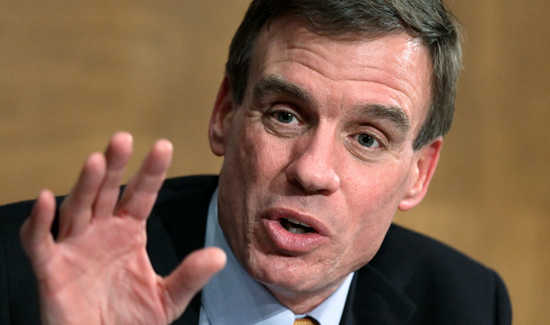
Virginia Democrat Mark Warner and Missouri Republican Roy Blunt introduced a new bill in the Senate last week, and the one really new thing about it — the thing that might give it legs — is the fact that Blunt is on board, along with four other Republicans. The only Republican to previously get behind an I-bank effort, Kay Bailey Hutchison, is no longer in the Senate.
The BRIDGE Act’s sponsor list so far is evenly split between Rs and Ds. In addition to Blunt and Warner, the bill has been co-sponsored by Sens. Lindsey Graham (R-S.C.), Kirsten Gillibrand (D-N.Y.), Dean Heller (R-Nev.), Chris Coons (D-Del.), Amy Klobuchar (D-Minn.), Roger Wicker (R-Miss.), Claire McCaskill (D-Mo.), and Mark Kirk (R-Ill.).
The idea is to use federal loans and loan guarantees to incentivize private investment in infrastructure.
The BRIDGE Act (that’s “Building and Renewing Infrastructure for Development and Growth in Employment”) would establish an “Infrastructure Financing Authority” (IFA) to “fund the most important and most economically viable projects nationwide, and incentivize private investment,” according to a bill summary [PDF]. The IFA would “closely follow the Export-Import Bank model,” particularly its quasi-governmental form. The Warner-Blunt proposal would make the IFA a government-owned entity but independent of any federal agency (though the Treasury Department’s Inspector General would oversee IFA’s operations for the first five years), with an explicitly bi-partisan board.
In that and other ways, the proposal is more similar to the Kerry-Hutchison-Warner proposal of 2011 than to the Rockefeller-Lautenberg plan, also first introduced in 2011 and re-introduced earlier this year. Like the Kerry-Hutchison-Warner BUILD Act, the Warner-Blunt proposal would not house the IFA within U.S. DOT, it would not include a grant program, and it would fund a wide variety of infrastructure projects (including water and energy) in addition to transportation. The Rockefeller-Lautenberg plan would have started out as transportation-only, though it left itself the option of broadening its scope later on.
While credit-worthiness is important, IFA projects would also have to “show a clear public benefit” and “meet economic, technical and environmental standards.” While the bill would cost $10 billion in initial seed money, it would then be self-sustaining via the returns on its lending. Combined with investment from the private sector, that $10 billion could turn into as much as $300 billion in new transportation projects, according to Warner’s office.
The proposal has drawn positive responses from different quarters. Jane Garvey, North America chair of Meridiam Infrastructure and former administrator of the Federal Aviation Administration, said the independent nature of the IFA would “stimulate responsible investment that is good for the U.S. taxpayer by prioritizing projects with strong public benefits and clear financing plans.” Bill Graves of the American Trucking Association, cognizant of the difference between financing and funding, notes that the BRIDGE Act would need to be combined with a gas tax increase to “provide the funding levels needed to maintain and improve our nation’s highways.” And James Corless, director of Transportation for America, said, “These tools will help communities not only bring their infrastructure into a state of good repair but also build the system the need to compete in the future.”
If Warner and Blunt hope the BRIDGE Act will get folded into the next surface transportation reauthorization, they’ll be up against formidable opposition. They have to deal with the many Republicans who would rather eat worms than put their names on anything Obama supports. And not only that, they’ll also have to contend with Senator Barbara Boxer and other negotiators of MAP-21 who seem to feel that MAP-21 — while it only has a two year duration — set policy for the next six years and that the task of the next bill is mainly to fix the revenue stream.

Read More:
Streetsblog has migrated to a new comment system. New commenters can register directly in the comments section of any article. Returning commenters: your previous comments and display name have been preserved, but you'll need to reclaim your account by clicking "Forgot your password?" on the sign-in form, entering your email, and following the verification link to set a new password — this is required because passwords could not be carried over during the migration. For questions, contact tips@streetsblog.org.