Does Texas DOT Have the Authority to Kill Bike-Share in El Paso?
Just a few weeks ago, El Paso was all ready to go with a new bike-share network, or so it seemed. The city had lined up $400,000 in local funds from the city of El Paso, the University of Texas at El Paso and a grant from Texas Commission on Environmental Quality. The regional planning agency had unanimously signed off on awarding the project $1.6 million in federal transportation funds earmarked for air pollution reduction. Suburban communities had even started expressing interest in being added to the system.
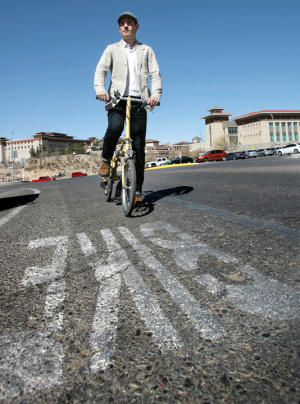
But last month the Texas Department of Transportation pulled the rug out. TxDOT told local and regional officials it did not support the use of federal Congestion Mitigation and Air Quality (CMAQ) funds for the project. State officials have been coy about what they’d rather see the money spent on, but they haven’t backed down. And, not content to strip funding, TxDOT officials are now plowing ahead to “deprogram” the whole bike-share project altogether, removing it from contention for any kind of funding.
Bike advocates in the city have been taken aback. After all, TxDOT officials were part of the unanimous vote by the regional planning body to disperse the CMAQ money in May.
“How can TxDOT and the [El Paso Metropolitan Planning Organization Transportation Policy] Board ever expect the community to trust in the transparency of our public agencies when a program that was planned and approved through legitimate channels was then shelved by bureaucrats in favor of vague, unnamed, and unpublicized projects?” wrote Scott White, a board member at Velo Paso Bicycle-Pedestrian Coalition, in a letter to the planning organization’s board [PDF]. “The board must ask whether TxDOT overstepped its jurisdictional authority, and if so, was this the first time?”
I asked around about the legitimacy of TxDOT’s actions — whether the state agency does indeed have the authority to strip this regionally-approved project of federal funds. TxDOT apparently believes that bike-share isn’t an appropriate use of CMAQ funds. But FHWA’s Texas field office approved the expenditure in [PDF] in June. Furthermore, many bike-share programs around the country have benefited from CMAQ funding, including Washington’s Capital Bikeshare.
I asked Michael Medina, assistant director of the El Paso MPO, where TxDOT’s authority to veto the project comes from. He said: “I am not aware of any statuatory or regulatory power that they have.”
I asked TXDOT to name the exact statute or policy that empowers them to pull funds from this project. So far, the agency has not responded.
Scott White, of VeloPaso, thinks the state doesn’t have the authority to strip federal funds already approved by federal and regional officials for the project. That’s why, White thinks, TxDOT is moving to have the project “deprogrammed,” or stripped out of the region’s planning project list altogether. The decision about whether to deprogram the project will be made at the El Paso Metropolitan Planning Organization Transportation Policy Board meeting on Friday. White and other bike advocates have been campaigning hard not to have the bike-share plan deprogrammed, appealing to board members and even Congressman Beto O’Rourke.
I asked Medina if officials from El Paso could essentially ignore TxDOT’s complaints and pursue the project anyway.
“We’ll see what the board does” on Friday, he said.

Read More:
Streetsblog has migrated to a new comment system. New commenters can register directly in the comments section of any article. Returning commenters: your previous comments and display name have been preserved, but you'll need to reclaim your account by clicking "Forgot your password?" on the sign-in form, entering your email, and following the verification link to set a new password — this is required because passwords could not be carried over during the migration. For questions, contact tips@streetsblog.org.