Will the Next Transpo Chair Continue Attacks on Bike/Ped Funding?

This is the second of two posts examining Rep. Bill Shuster’s candidacy for the chairmanship of the House Committee on Transportation and Infrastructure. Yesterday, we took a look at Shuster’s positions on rail and his leadership style. Here we delve into his record on active transportation and the always-thorny topic of funding.
While you might not agree with him that privatization is the best medicine for a struggling passenger rail program, by most accounts Rep. Bill Shuster (R-PA) has a genuine interest in the future of rail in America. It’s hard to make the case that he cares nearly as much about making streets safe for walking and biking.
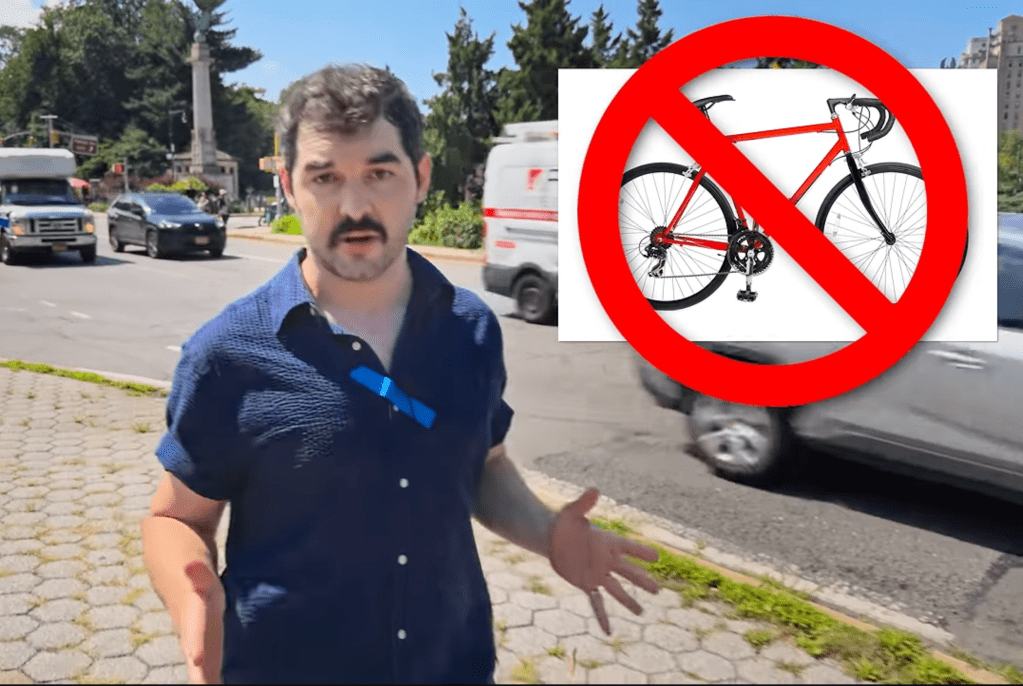
Bike Paths Kill!
Indeed, perhaps the most alarming aspect of a Bill Shuster chairmanship is what it would mean for progress on street safety. Shuster is no friend of the movement to make American cities and towns more bikeable and walkable.
He fell in line with the Republican army against Transportation Enhancements, a program that mostly funded bike/ped projects under the previous transportation law. “Not everybody uses a bike path,” Shuster said at the time. He chafed at what others in his party called “set-asides,” saying, “That’s for [the] community to decide, not for our federal government to sit up here in Washington and decide.” He claimed that eliminating TE was “fundamental to the reforms that we are trying to include in this bill.”
Indeed, Shuster’s conviction that transportation is a federal responsibility ends at the interstate. “When you start getting into the inner city, the federal government has less of a role to play,” he told an audience at the Transportation Research Board’s annual conference in January, ignoring the fact that much interstate spending is used to provide capacity for local car trips on highways. “It’s up to the local community and state to decide [their transportation priorities].”
His position that federal transportation dollars should be “focused like a laser [yes, one of his favorite phrases] on the national highway system” alarmed the Rails-to-Trails Conservancy, which issued an action alert to Pennsylvania voters when Shuster was appointed to the conference committee negotiating the final surface transportation bill. RTC noted that during his official conference statement, Shuster “regrettably… call[ed] out ‘bike paths’ as wasteful, even dangerous.”
“Coming from Pennsylvania with 5,000 deficient bridges,” Shuster had said, “it’s unconscionable for me to go to my state and say you have to spend it [transportation dollars] on bike paths when you could cause death to people on the roadways if we’re not able to spend those dollars, those precious dollars, on rebuilding the bridges.”
RTC noted that if Shuster were really concerned about safety, he would do something about rising pedestrian and cyclist fatalities in Pennsylvania.
Shuster voted against an amendment to restore not just TE but also Safe Routes to School in the never-passed Republican transportation proposal, H.R. 7.
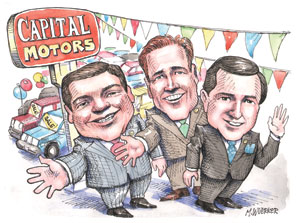
Highways, it appears, are in his blood. A major four-lane interstate in his district is named the Bud Shuster Highway in honor of the massive road-building largesse his father brought home from Congress through earmarks. And Bill Shuster, along with his brother, Robert, ran a Chrysler dealership in East Freedom, Pennsylvania, before being elected to his dad’s seat in the House.
In fact, the dealership was at the epicenter of an ethics scandal that marred Bud Shuster’s legacy. The elder Shuster used his office to help out one of the primary investors in the business, both before and after the investor put $30,000 in to the dealership – some old-fashioned, mutual back-scratching.
Tolling, Drilling, Taxing
It is widely acknowledged that Congress will have a hard time making any changes to current transportation law until something is done to shore up the Highway Trust Fund. Since throwing his hat into the ring for the chairmanship, Bill Shuster has openly acknowledged the need to find new revenues for transportation, saying, “Certainly you have to look at the gas tax” and “all those things.” But he still toes the line that practically everyone in Washington recites: Now is not the time. (No wonder: Shuster signed Grover Norquist’s tax pledge again this year.) When will it be time to consider raising the gas tax? When MAP-21 expires and there’s nothing left in the Highway Trust Fund?
In the past, Shuster has supported tolling and using more public-private partnerships to fund transportation, a recipe for building lots of tolled highways. He also wrote an op-ed defending Paul Ryan’s bare-bones “Path to Prosperity” budget, which would have been devastating for transportation funding, especially when it comes to transit, biking, and walking. But then Shuster, along with the rest of his party, decided the Ryan approach wouldn’t be necessary – they’d just use oil and gas drilling revenues to pay for transportation (one of his party’s more hare-brained schemes, which Shuster supports). The shift seemed to suit Shuster well; he had also introduced a bill in 2008 to jump-start oil and gas exploration on the Coastal Plain of Alaska and the outer Continental Shelf.
As for the funding conundrum, Shuster maintains that less money will be needed now that MAP-21 has “streamlined” the environmental review process — or “steamrolled” it, as environmental advocates say. He’s pleased with steps to weaken environmental review in that bill but says, “There’s more to be done, especially to free up our states.” Transportation reformers, meanwhile, point out that states actually made out like bandits in the bill, and there should be more incentives for them to spend on useful transportation projects instead of expensive highway boondoggles.
The Horserace
For those interested in John Mica’s future, he says that he’s staying on T&I whether he’s chair or not – but he would like a leadership position, if not on T&I, then somewhere else. He’d like to take over the gavel of the Oversight and Government Reform Committee, but, unlike Shuster, he’s not about to challenge the incumbent. Rep. Darrell Issa, who’s got two more years before he comes up against term limits, asked Mica not to seek the post, and he agreed.
Still, Mica promises, “I will be chairman” in two years, and he let slip that he’s already relishing taking on the partisan attack dog role that Issa has so ably filled. Mica was quoted in the Orlando Sentinel yesterday saying it would be “pretty exciting” to take over that committee. ”Can you imagine Mica as chairman of government reform for the last two years of the Obama administration?” he asked.
The Republican Steering Committee (on which Shuster serves) and the House Republican Conference will make the final decision over who gets to lead the House Transportation Committee in the next session. Committee staffers aren’t sure when that will happen, but it will certainly happen before Congress adjourns for the holidays.

Read More:
Streetsblog has migrated to a new comment system. New commenters can register directly in the comments section of any article. Returning commenters: your previous comments and display name have been preserved, but you'll need to reclaim your account by clicking "Forgot your password?" on the sign-in form, entering your email, and following the verification link to set a new password — this is required because passwords could not be carried over during the migration. For questions, contact tips@streetsblog.org.