Boxer Changes Her Tone, Adopts a Fighting Stance

The transportation bill conference committee negotiations have been difficult and contentious, by all accounts — all except Senator Barbara Boxer’s account. The EPW chair has been optimistic when others have been bitter, consistently focusing on how much the two sides agree rather than the places where they’re still far apart.
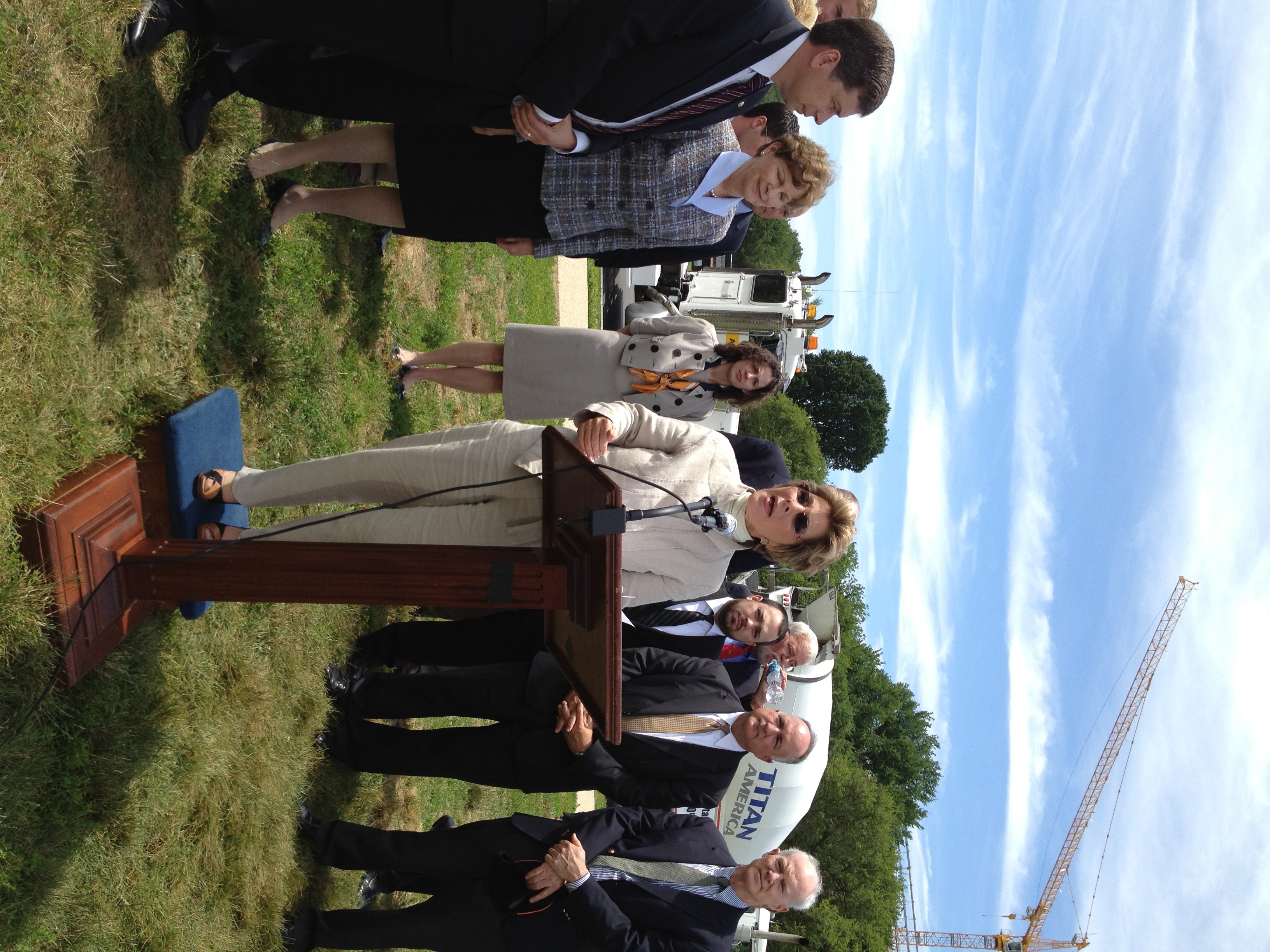
But that seemed to change with her fighting words at a press event yesterday.
“I’ll be candid,” she said. “There is only one group standing in the way of a bill, standing in the way of three million jobs, standing in the way of thousands and thousands of businesses struggling right now — and those are the House Republicans.”
The seven other senators who joined her at the podium used even stronger words. New York Democrat Chuck Schumer decried the “militants, radicals, and extremists” among the House Republicans — not all Republicans, he was careful to note — who don’t believe the federal government should even be involved in building transportation infrastructure.
Do the math, said Sen. John Kerry. Every billion dollars invested in infrastructure yields an estimated 27,000 to 35,000 jobs. This is a $109 billion bill — “that’s several million jobs.” He echoed a point Schumer had made, that the economy is recovering but is being held back by lingering high unemployment in the construction sector. “Those folks would go to work tomorrow if this bill were passed,” Kerry said, adding that it was “an utter disgrace that people would say they’re with the American people and then refuse a bill that would put them back to work.”
“Where’s the speed bump? Where’s the road block?” asked Delaware’s Chris Coons. “It’s right there,” he said, pointing to the southern wing of the Capitol building, “in the House of Representatives.”
The senators were joined by a convoy of five large construction trucks behind them (breaking DC’s three-minute idling law), symbolizing the idling construction sector, one assumes.
Coons and some of the other senators differentiated between the “responsible Republicans” — including James Inhofe and David Vitter, who helped broker the deal on the Senate transportation bill — and the “small band of extremists” that, by delaying bill passage, “suffocates the opportunities for growth, for jobs, and opportunity.”
The Democrats were all on message: Reasonable people would pass this bill. It’s only being held up because of a bunch of fanatics in the House. Which side will House Speaker John Boehner take?

“The speaker could call members of Congress and say ‘I want a bill’ and it would be done Monday night,” Boxer said. “If the speaker of the House walks away from this, he’s walking away from America.”
Boehner is in a tough position. The House Republicans have made it a policy to pass legislation without needing any help from Democrats in the chamber. That’s why the legislation passed in this Congress has been so ideological — the GOP hasn’t needed or wanted to moderate itself to draw members from across the aisle. In fact, the more extreme, the better for the right wing of the Republican party.
With 82 Republicans voting last week to hold spending to Highway Trust Fund levels, a position now seen as a vote against any federal involvement in transportation funding, it appears the House will need some Democrats if it’s going to approve a conference report in the end. If Boehner wants to get a bill done, he’ll work with those Democrats and abandon the Tea Party wing that wants to hold up this bill. But that would open the speaker up to a torrent of criticism from the right, including from his rival, House Majority Leader Eric Cantor, who has kept the transportation bill off the summer agenda.
Boxer said the two sides now have agreement on 80 percent of the bill. She said they’re saving things like Keystone XL and the coal ash amendment until the end, since this is a transportation bill, so they’ll deal with transportation policy first. She hedged on whether Keystone would figure into the final deal at all, drawing no lines in the sand. Still, observers note that Keystone and coal ash could crash the negotiations — if disagreements on transportation policy don’t crash them first.
Another extension of current law, without any provision to increase revenues or find another funding source, would bankrupt the Highway Trust Fund by the end of the year.
“That would be something, wouldn’t it?” Boxer said. “For John Boehner and Eric Cantor to preside over the end of a program that’s been in place since Dwight D. Eisenhower?”

Read More:
Streetsblog has migrated to a new comment system. New commenters can register directly in the comments section of any article. Returning commenters: your previous comments and display name have been preserved, but you'll need to reclaim your account by clicking "Forgot your password?" on the sign-in form, entering your email, and following the verification link to set a new password — this is required because passwords could not be carried over during the migration. For questions, contact tips@streetsblog.org.