LaHood Defends High-Speed Rail Program At House Hearing

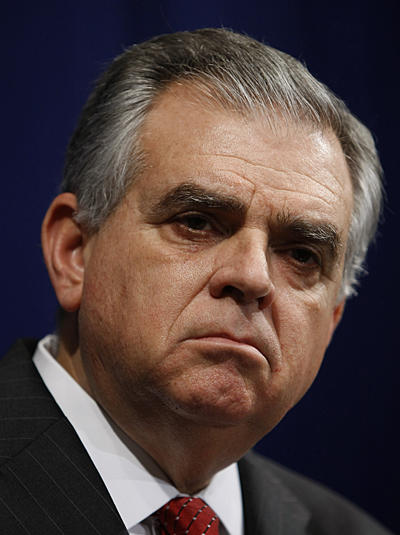
It’s Transportation Secretary Ray LaHood’s birthday, and he’s spending it testifying before the House Transportation Committee. The hearing is on “Mistakes & Lessons Learned” from the high-speed rail program, but — no surprise here — LaHood and House Republicans have differing ideas about what “mistakes” have been made.
Here are some highlights.
Chair John Mica said he’s a “strong, committed advocate to high-speed rail service in the United States” but he’s been “very disappointed” in the progress so far. “We have hit an impasse,” he said.
Mica pointed to the ballooning cost estimates for HSR in California and reiterated his long-held position that it’s the wrong place to build high-speed rail. LaHood agreed that “this is an expensive project, but all of the money is going to American workers to build American infrastructure.” Mica stood firm that the Northeast Corridor, not California, is the place to build.
“We’re taking our cues from you,” LaHood said. “We’re investing in the Northeast Corridor.” Mica said they’re still waiting for the money to be awarded.
Rep. Bill Shuster, who chairs the rail subcommittee, said the president’s vision to bring high-speed rail access to 80 percent of the American people isn’t realistic. He said there’s no money for it — and no need. “I don’t hear people all around the country clamoring for high-speed rail,” he said.
When LaHood said that the HSR vision isn’t “Ray LaHood’s vision” — it comes from the states themselves — Shuster said yes, but his daughter wants a luxury SUV and he don’t have the money for it, so she’s not getting it. “I’m glad you didn’t think that about the Keystone Line,” LaHood shot back. He said Shuster asked for the money for that line and the DOT gave it. “Right,” Shuster said, I believe in rail investment “where it makes sense.” But, Shuster noted, he didn’t ask for help funding rail improvements between Harrisburg and Pittsburgh – and that line goes right through his district. But it’s not a strategic investment priority for the country.
Shuster suggested actually taking money from the California project and putting it toward the NEC — not likely to be a popular suggestion, when federal funding is already just $3.6 billion of California’s $98.5 billion total bill.
Mica mentioned that Congress has cut off funds to HSR for the coming fiscal year, and says the body is “certainly not going to give Amtrak $117 billion [for its plan to bring faster trains to the NEC] based on its current record, lack of plan, and lack of progress.”
LaHood made his usual speech about the incredible demand for high-speed rail funds: Yes, three governors have returned the money — but when Florida’s Rick Scott did so, 24 states (and DC and Amtrak) submitted requests for the money — “a testament to American enthusiasm for high-speed rail.”
LaHood also said that it was Republicans who initially laid out the first few HSR corridors and he lamented the end of bipartisan cooperation on transportation, and high-speed rail in particular.
He and Mica did battle over how fast these “fast” trains will go. Mica says “pseudo-high-speed rail projects” give HSR “a bad name” in the United States because “they will not operate at high speeds,” they’re just a “mirage.” Mica said the Chicago to St. Louis line will only go an average of 71 mph, a “snail-speed” train from Chicago to Detroit will just go an average of 64 mph, and the Portland-to-Vancouver line will go 65 mph. LaHood said those are current speeds, before the investment and the improvement. Mica said no, those numbers came from your department as the goal speeds for after the improvements. (LaHood’s estimates of 110 mph for Chicago to St. Louis and 200 mph for California are consistent with what’s been reported up until now.)

Read More:
Streetsblog has migrated to a new comment system. New commenters can register directly in the comments section of any article. Returning commenters: your previous comments and display name have been preserved, but you'll need to reclaim your account by clicking "Forgot your password?" on the sign-in form, entering your email, and following the verification link to set a new password — this is required because passwords could not be carried over during the migration. For questions, contact tips@streetsblog.org.