T4America Responds to the Raquel Nelson Case in the Washington Post

The first shocking thing about Raquel Nelson’s conviction for vehicular homicide was simply that it happened at all. After all, the mother of three wasn’t even driving a car — she was crossing a wide street with poor pedestrian infrastructure when her four-year-old son was killed by a hit-and-run driver.
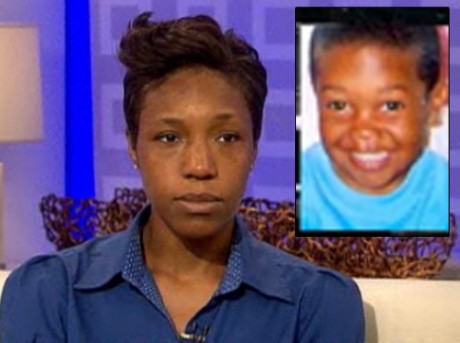
The second shocking thing about the case was that it captured so much media attention. Sure, Streetsblog was going to cover it. But the Today Show? Fox News?
As encouraging as it was to see so much mainstream broadcast media focused on Nelson’s case — and all in a sympathetic light — little of that coverage got to the root of the problem: dangerous street design in auto-centric communities.
So we’re glad to see the Washington Post remedying that situation by printing an op-ed by David Goldberg, communications director at Transportation for America. In his piece yesterday, Goldberg said:
Nelson was found guilty of killing her son by crossing the road in the “wrong” place. But what about the highway designers, traffic engineers, transit planners and land-use regulators who placed a bus stop across from apartments but made no provision whatsoever for a safe crossing? Those who ignored the fact that pedestrians always take the shortest possible route but somehow expected them to walk six-tenths of a mile out of their way to cross the street? Those who designed this road — which they allowed to be flanked by apartments and houses — for speeds of 50 mph and more? And those who designed the entire landscape to be hostile to people trying to get to work or carrying groceries despite having no access to a car? Are they not culpable?
This phenomenon is not unique to metro Atlanta. Transportation for America researched 10 years’ worth of pedestrian fatalities nationwide and found this pattern again and again. The bodies line up like soldiers along certain corridors — the first clue that the roadway is not designed for the safety of the pedestrians who are obviously using the road.
Goldberg said that the problem is especially severe in inner-ring suburbs that were designed with the assumption that there would never be a reason for anyone to try to get anywhere without an automobile. But that assumption has broken down. Sometimes it breaks down along income lines, as people like Raquel Nelson can’t afford a car. T4America has brought attention recently to the fact that it can break down along age lines, with the elderly unable to drive and finding themselves with few alternatives.
In some places around the country, these car-dominated suburbs are trying to change. Here in the D.C. area, Tysons Corner is engaged in a decades-long process of trying to increase density, improve walkability, and create an honest-to-goodness street life in an area where people used to drive from shopping mall parking lot to shopping mall parking lot. But these suburban retrofits are the exception, not the rule. And in the time it’ll take to make Tysons a pedestrian-friendly “edge city,” Raquel Nelson’s children will have children of their own.
But that doesn’t let the Cobb County DOT, or any other jurisdiction, off the hook for making pedestrians safer today. As Goldberg writes in the Post, “One crosswalk with traffic signals would save more lives, and in all likelihood cost less money, than this hurtful prosecution cost the taxpayers of Georgia. Fixing thousands of these deadly mistakes across the country would, in the long run, save both lives and dollars.”
Members of Congress are now home for their month-long recess. When they come back, they’ll have less than three weeks to figure out what to do before the current transportation reauthorization — and, coincidentally, the gas tax — expires. The short amount of time means Congress will likely either patch together a solution far too hastily, or they’ll punt, kicking the can down the road till a future, undetermined date when they can consider the question more fully. Let’s hope that they give transportation the time and attention it needs sooner than later — and that when they do, they’ll think about more than just budget deficits and highway revenues. Let’s hope they think about Raquel Nelson’s son and realize that pedestrian safety is a national priority, and that it comes cheaper than inaction.

Read More:
Streetsblog has migrated to a new comment system. New commenters can register directly in the comments section of any article. Returning commenters: your previous comments and display name have been preserved, but you'll need to reclaim your account by clicking "Forgot your password?" on the sign-in form, entering your email, and following the verification link to set a new password — this is required because passwords could not be carried over during the migration. For questions, contact tips@streetsblog.org.