

Macon, Georgia, Striped a Good Network of Temporary Bike Lanes and Cycling Soared
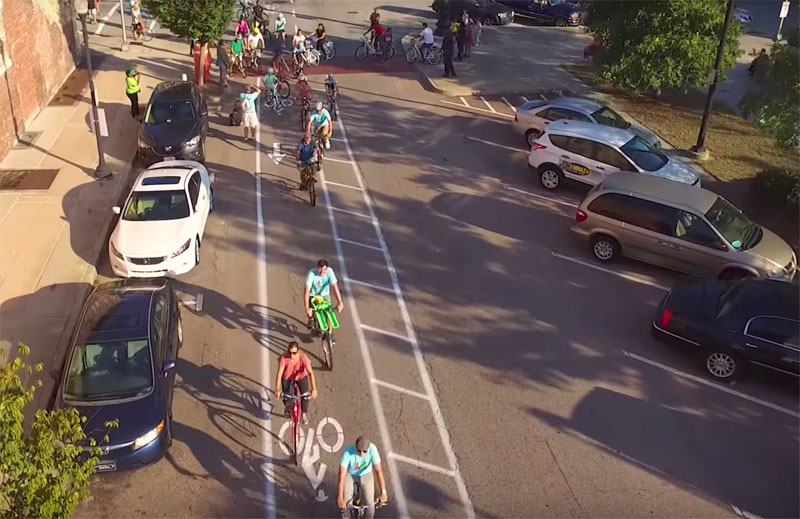
What would it take to get people biking in midsized Macon, Georgia? Short, disconnected bike lanes haven’t done much, but a recent experiment demonstrated the power of a safe, connected network of bike infrastructure.
Helena Kotala at Bicycle Times Magazine reports on Macon Connects, a project of the local non-profit Newtown Macon:
In the past, the city government had put up three non-contiguous blocks of bike lanes and then claimed no one rides. Macon Connects set out on a mission to change that perception. With eight miles of temporary bike lanes, the increase in bike traffic was astounding, proving that if you build it, they will ride.
This video from October gives a good look at the initiative:
Bicycle counters were set up along four streets where Macon Connects striped bike lanes. The average increase in bike traffic after the lanes were installed was more than 800 percent, according to Newtown Macon.
The trial, which cost $150,000, lasted two weeks, but it has resulted in some longer-term changes for the city, Kotala reports:
A few permanent bike lanes have already been built since the experiment, with plans for more on the way. Now, every time a road is repaved, it will be evaluated to see if a bike lane can be added. One of the city’s traffic engineers even volunteered his time to design a bike lane that connects four neighborhoods to downtown Macon, while a private donor paid for its installation.
More recommended reading today: The Political Environment reports that a federal court has blocked Wisconsin from using federal funds on a highway expansion the state justified with bad data. And Reinventing Parking says that even in places with no transit access, it’s still beneficial to put a price on parking.








Comments Are Temporarily Disabled
Streetsblog is in the process of migrating our commenting system. During this transition, commenting is temporarily unavailable.
Once the migration is complete, you will be able to log back in and will have full access to your comment history. We appreciate your patience and look forward to having you back in the conversation soon.