How Do You Fight Big Car? A New Group Fund Pro-Transit Campaigns
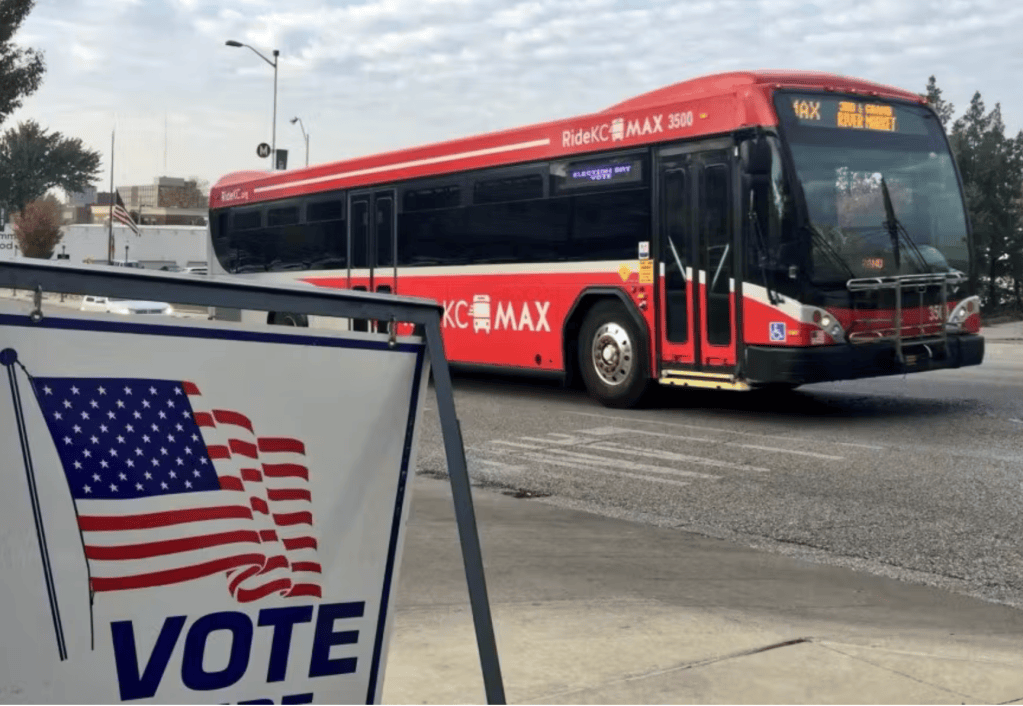
A first-of-its-kind organization is offering support — and cutting checks — to campaigns that challenge car dependency, and helping level the scales against the Big Auto and its grip on U.S. transportation culture.
The new Center for American Mobility launched this week with the vision of becoming “the Emily’s List of transportation,” new president and CEO Shelley Brindle said, referring to the pro-Choice group. Unlike that organization, though, the Center for American Mobility will fuel bipartisan efforts to give Americans better mobility options beyond cars alone, starting with down-ballot measures and eventually scaling up to support pro-transit candidates, too.
“There are lots of incredible organizations that do amazing work in terms of advocating for expansive transit and safe streets,” Brindle added. “But there really haven’t been any that bring the political firepower to actually bring that advocacy to fruition.”
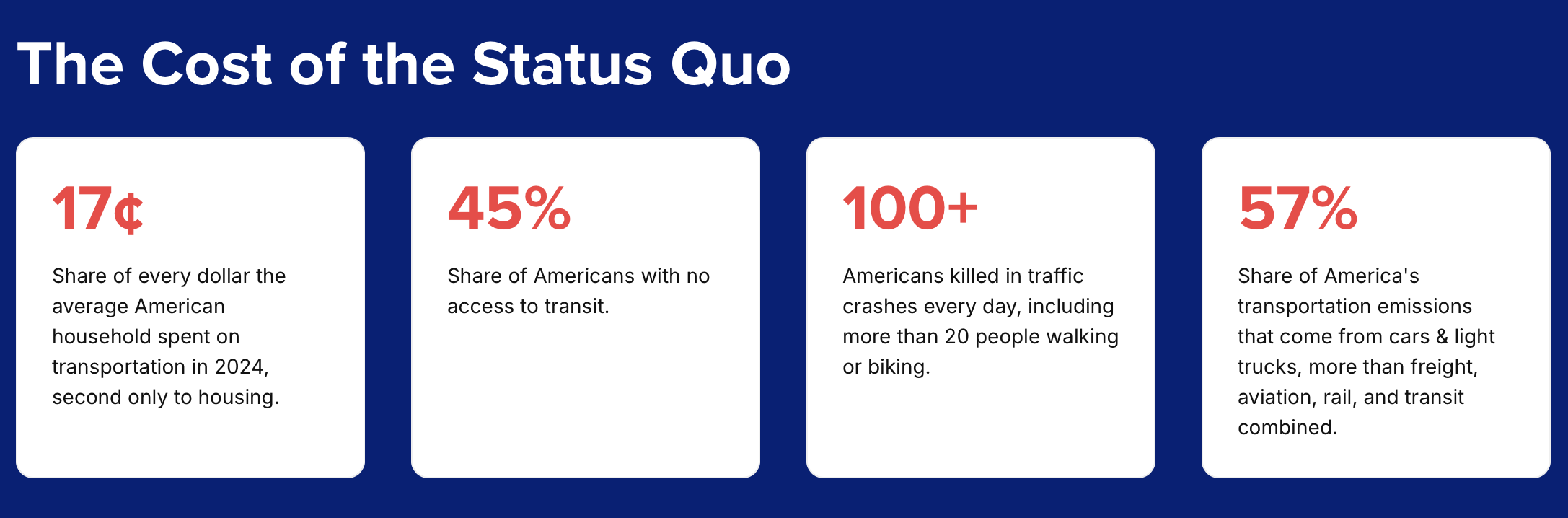
And in a political environment where they’re badly outgunned, transportation advocates could use all the help they can get.
A study by the Union of Concerned Scientists earlier this year found that organizations belonging to the “highway lobby” collectively spend more than $100 million every year to “keep us all in a car dependent transportation system” — and that research only quantified the impact of the eight trade associations that most directly benefit from building roads, not the universe of other private interests who make money off keeping Americans trapped behind the wheel for hours every day.
Much of that money flows to candidates who are happy to protect the car-dependent status quo, or to defeat ballot measures aimed at expanding public transit. And when transportation reform wins anyway — which it often does — lobbyists pour even more money into shifting public opinion through media campaigns.
Too often, Brindle says America’s overwhelming support for sustainable modes gets drowned out in all the noise.
“One of the things we’d like to do as an organization is to help connect all those dots around the country,” she added. “Those wins seem to happen in isolation, but they’re [everywhere.]”
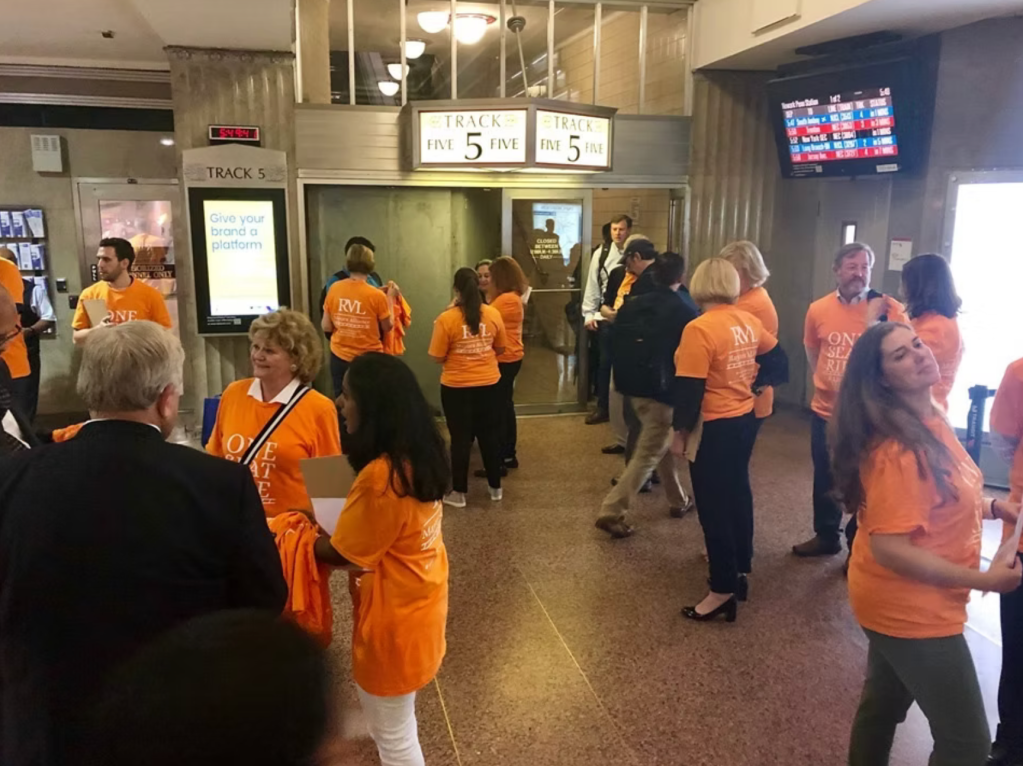
Brindle fought some of those battles herself as the two-term mayor of Westfield, New Jersey, to which she was elected after retiring from a 27-year career as an executive at HBO. She organized a coalition of “32 bipartisan ticked-off mayors” across Jersey’s Raritan Valley to fight for better and more-direct service along the commuter rail line she rode to New York City for decades, including a protest at Newark’s Penn Station (above) that drew swarms of local electeds in signature orange shirts.
From there, her passion for transportation reform only compounded.
“I just became an urbanist by default,” Brindle added. “I became obsessed with things like parking minimums, and how the whole ecosystem works together with transportation and economic development.”
Brindle’s Center had its first chance to put those obsessions into practice this midterms, when the organization helped fund two local campaigns: a ballot measure to fund a new transit authority in Yampa Valley, Colorado, and one to increase bus service levels by 50 percent in Pierce County, Washington. Both won by strong margins.
The group says it’s supporting additional campaigns, including creating a research arm to measure the economic impact of transit investment on families and communities, with the goal of creating bipartisan support. The Center also aims to provide messaging and other campaign resources to help advocates win, as well as a gathering place for advocates with similar goals to join forces and compare notes.
Eventually, Brindle says the organization will move up the ballot, too, and provide support for pro-transit candidates at the local and state levels — and maybe even someday at the federal level, too. And if candidates don’t make good on their transportation-related campaign promises, they’ll lose the CAM stamp of approval.
“We want to be a place where [candidates] are striving to get and maintain an endorsement from us,” she added. “Hopefully that becomes a badge of credibility for them.”
Whether CAM can achieve that vision, of course, depends on how widely it can scale. Brindle hopes its initial major sponsors — transit tech company Via and philanthropy Arnold Ventures — will someday make up just a “small percentage of our funders,” with a larger share coming from the grassroots.
“We have large-scale national ambition to be the voice for transportation in America,” Brindle added. “We want to be a place that can amplify everybody [else] that’s already out there. Our goal is to help broaden the coalition … [so we can] make transit and transportation something that everybody cares about.”