Doing Big Things: How Seattle Put Light Rail On A Floating Bridge
We’ve been busy at Sound Transit. We’re in the midst of one of the most-ambitious transit expansions in the country. We set all-time records for daily and monthly ridership during the World Cup during our region’s moment as host to visitors from around the globe. And our board just closed a daunting gap in the agency’s long-term financial plan, setting us on a sustainable trajectory to continue building and operating a world-class transit system for decades to come.
We’ve done all this while growing our light rail ridership beyond that of systems in L.A., Boston, and San Diego to claim the top spot nationally, and while we’ve driven down our monthly hours of unplanned service disruptions to a new low since we started tracking that metric in 2024.
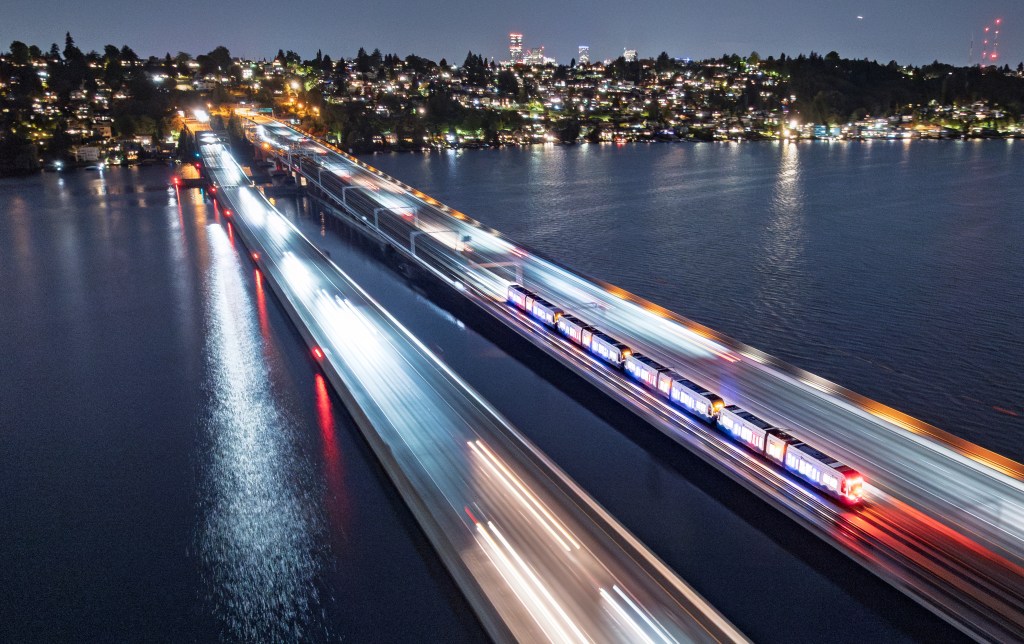
In March, we took a giant step forward in our system expansion when we opened the Crosslake Connection, a new light rail segment linking Seattle to the tech-oriented communities of Bellevue and Redmond on the east side of Lake Washington. The feat required groundbreaking engineering — it is, after all, the world’s first passenger rail on a floating bridge. And the support Sound Transit received on the day we cut the ribbon is something none of us at the agency will ever forget.
Getting to that moment, however, required overcoming major challenges. There were pockets of community opposition. There were lawsuits. There were thorny engineering problems to solve. The opening was ultimately delayed by almost three years.
At a high level, what got us to that ribbon-cutting was an abiding commitment from all who worked on the project to see it through to completion. Beyond that, there are several discrete lessons we took away from the Crosslake opening that I believe can be applied to just about any ambitious public works project. Following are three of them:
Lesson 1: Know and uphold your values
Part of how we overcame project obstacles was by adhering to a clear set of values that guided our decision-making process. These longstanding agency values of safety, integrity, collaboration, and quality were not abstract principles, but pillars in the practical framework that allowed us to navigate each challenge we encountered.
In our planning of the Crosslake segment, some residents in a nearby jurisdiction were unhappy with a change in highway lane configuration due to the addition of light rail onto the bridge. In response to a lawsuit they brought — one that would have delayed permits — we eventually reached an agreement to carry out some mitigation measures.
When we made it to the Crosslake opening years later, city leaders from this community praised the new segment, even calling rail on the bridge “one of the most beautiful public train routes anywhere.”
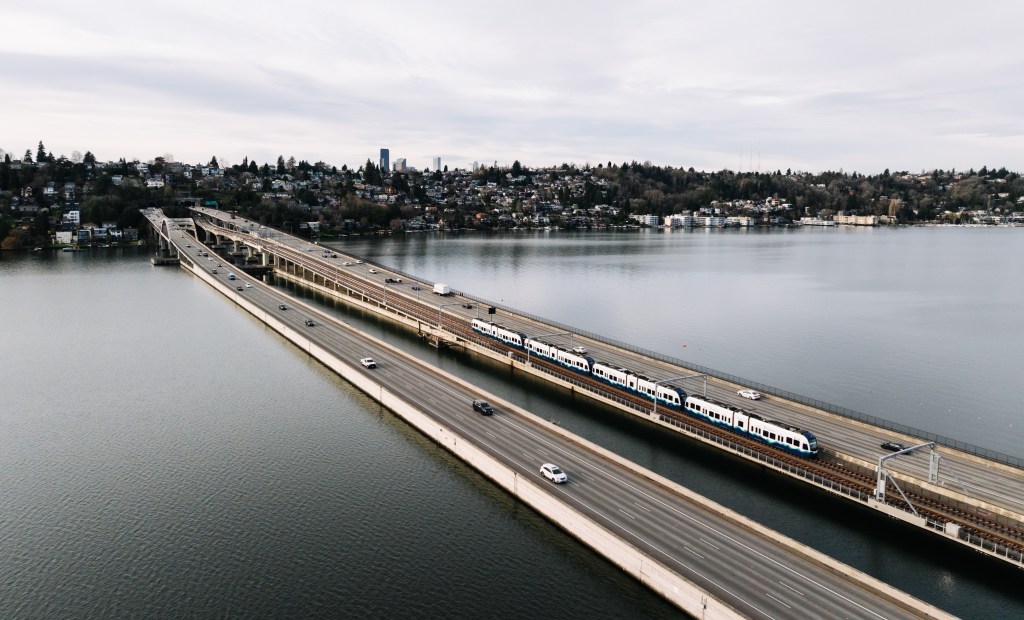
What started as a contentious legal battle eventually evolved into a productive relationship. Over time, we built trust with this community by adhering to our values — by being transparent and collaborative in response to both local and regional needs.
Lesson 2: Iterate, refine and test
Being the first to do something comes with difficulties and risks. Our capital delivery team and partners faced a tall order when asked to run rail across a floating bridge. There was of course no blueprint from elsewhere to reference, so it required ingenuity, resolve, and a willingness to challenge our own thinking.
To ensure we developed a piece of rail infrastructure that could move in six directions and accommodate changing water levels, wind and waves, and vehicle traffic volumes, we designed a novel track bridge inspired by systems used to retrofit large buildings for earthquakes. We then put our design to the test using full-scale models at the Transportation Technology Center in Colorado, with about 10,000 sensors placed on the trains and tracks to collect data. See this video for an in-depth technical look at the bridge project.
Once we entered the construction phase, we again had to lean on our values of safety, accountability and adaptability in navigating fabrication challenges so we could deliver not only a system that worked, but one that will function reliably and safely for generations to come.
Lesson 3: Connect the big picture to the details
When I started as CEO, one of my first requests of staff was to hand me a delivery schedule for the Crosslake project. The project team and I then reviewed it step by step, line by line, to identify any place where we could compress the schedule without compromising safety or system resilience. In doing this, we were able to draw clearer lines between how specific steps were being carried out and related impacts to the overall schedule.
The exercise bore fruit, as it enabled us to move up the previously assumed opening date by several months. This demonstrated how an organization’s leader is often uniquely positioned to coordinate efforts in service of a primary objective, encourage those working seemingly intractable issues to stop “suffering in silence,” accept an appropriate level of risk, and seek collaborative solutions to the toughest questions.
After opening the Crosslake segment, our agency and region were immediately rewarded. New riders begin using the newly-expanded system to commute to and from work, attend events, or simply enjoy a trip to one of the many destinations now accessible via a $3 train trip.

Read More:
Streetsblog has migrated to a new comment system. New commenters can register directly in the comments section of any article. Returning commenters: your previous comments and display name have been preserved, but you'll need to reclaim your account by clicking "Forgot your password?" on the sign-in form, entering your email, and following the verification link to set a new password — this is required because passwords could not be carried over during the migration. For questions, contact tips@streetsblog.org.