Talking Headways Podcast: Bill Fulton and the Future of Where
This Week on the Talking Headways podcast: Bill Fulton, who has worn many hats including mayor, planning director, think tank director, publisher, professor and currently can be found writing on Substack at The Future of Where.
Fulton and host Jeff Wood chat about the impacts of work from home on cities, changing migration patterns and the south’s new role as the “National Suburb,” tax policy and burdens, 100 years of zoning law and much, much more.
Scroll past the audio player below for a partial edited transcript of the episode — or click here for a full, AI-generated (and typo-ridden) readout.
Jeff Wood: I’m interested in what this does from a transportation perspective, too, because you do have these “Zoom-burbs,” as it were, and you have these folks who have to buy these now expensive cars. I mean, the average car, new car, is $50,000. You can only go so far and now insurance is getting more expensive. You have a lot of, like, climate issues too. But I’m just curious what this does to the regular discussion about transportation and affordability generally, because housing prices are pretty huge too, even if you’re in some of these far-flung areas.
Bill Fulton: Yeah, I think one of the things that has not been discussed enough is the increasing cost of owning a vehicle, as you said. We’ve seen efforts in the past by Center for Neighborhood Technology and others to show that the cost that you have to deal with is really housing-plus-transportation, right? And there’s trade-offs there, and there’s been various studies showing that, you know, if you live in San Francisco, you actually have a l lower housing-plus-transportation cost than you do in Houston, that kind of thing.
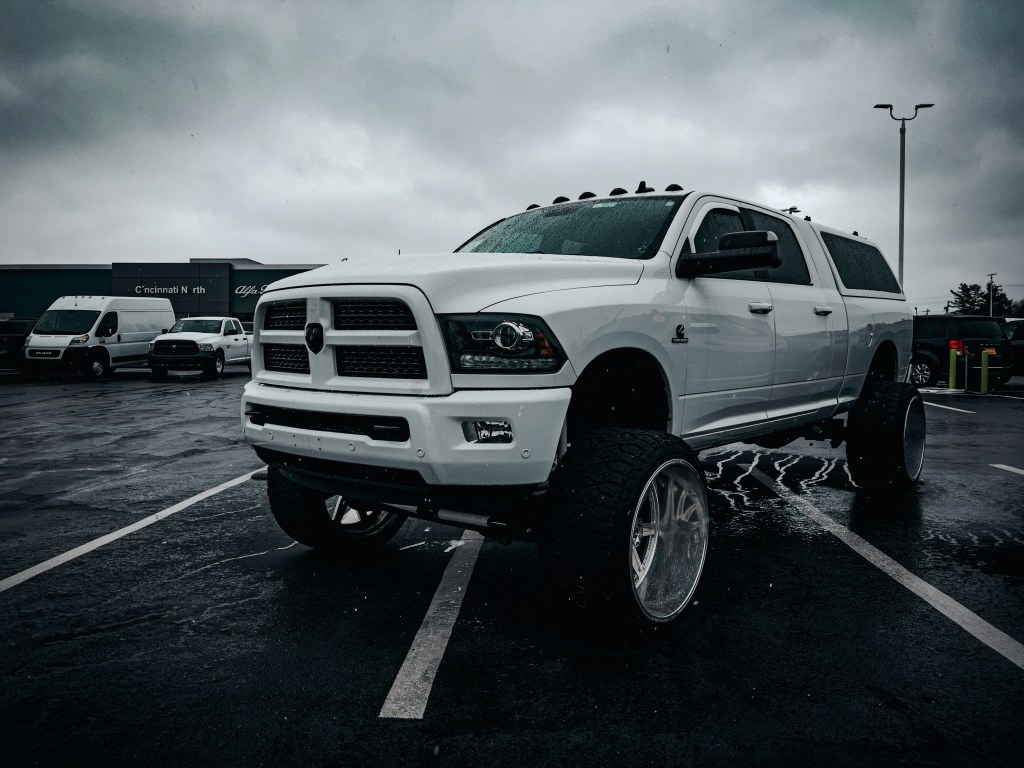
But new vehicles have gotten bigger. They’ve gotten way more expensive. It’s hard to imagine stretching the car loan out more than seven years. I never would’ve guessed in the old days that you would have a seven-year car loan, right? But a lot of these people who live on the fringe and, and particularly, as I saw in Texas, drive these big trucks, are incredibly stretched. So you see “drive ’till you qualify,” and that just gets harder and harder when the driving part becomes as expensive as the qualifying part, right? A lot of the people who live on the edge of the metropolitan areas are really quite stressed financially and also stressed in commuting too.
Jeff Wood: Another thing that brings up is taxes, property taxes, and those types of things. You’re in California, you know Prop 13. You’ve seen the evolution of it, and I’m always fascinated to hear from places like Texas and Florida that are even discussing getting rid of property taxes, and what that means for cities and this type of, you know, development and the growth of places.
Bill Fulton: Well, one of the things that I think has not sunk in in places even like Florida and Texas is how much sprawl really costs to serve and the tax burden. There’s this wonderful Venn diagram I’ve seen, right, you know, uh, good services, low taxes, low density, and, you know, in the middle it says, “Doesn’t exist,” right?
If you don’t get all those things at the same time — having lived, grown up in New York, and lived in California, in other words, having lived in high income tax states my entire life — it was really interesting to go to Texas and see, well, where do they get their money from, right? And, you know, part of it is that the services aren’t as good.
My wife is a retired teacher from Texas, and she never made nearly as much money as she would make in California as a teacher. Part of it is that in Texas rhere is some, you know, oil-related money that flows to the state. But — what’s interesting in Texas is that the burden is borne by the property taxes, and the state even moves around the school property taxes, kind of the way California does ,in order to plug the holes because the state doesn’t have income tax to plug the holes.
Now they’re talking about — and there are certain limitations now on property tax in Texas — but when Gov. Abbott talks about getting rid of property tax, I have no idea how they’re gonna pay for the schools or anything else, right? On a percentage basis, compared to your assessment, property taxes in Texas are about twice what they are in California.
Now, because those are higher in California, that doesn’t quite work out. But, you know, you’re talking 2, 2.5 percent per year of assessed value in Texas. And with no income tax and relatively moderate sales tax, there’s really no other way to keep the government functioning, particularly the schools. So unless Gov. Abbott also plans to kinda somehow shift all to charter schools and get rid of public schools, which he might wanna do, I don’t see how this works.
More likely, I think, is Texas now has a limitation on property tax revenue — and that might get cranked down more. That’s been the path in many other states, not just California.

Read More:
Streetsblog has migrated to a new comment system. New commenters can register directly in the comments section of any article. Returning commenters: your previous comments and display name have been preserved, but you'll need to reclaim your account by clicking "Forgot your password?" on the sign-in form, entering your email, and following the verification link to set a new password — this is required because passwords could not be carried over during the migration. For questions, contact tips@streetsblog.org.