Public Housing Seeks to Bar Residents from Having, Charging or Apparently Even Using E-Bikes
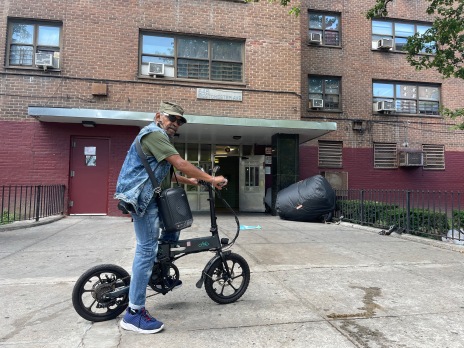
The city’s housing authority wants to bar residents from owning electric bikes or charging their batteries inside their units — or, apparently, even riding an electric bike on the grounds — a move that delivery workers and their supporters blast as forcing public housing residents to choose between having a place to live and having a job.
The New York City Housing Authority last month quietly issued a proposed new rule earlier this week and only gave affected people until July 10 to lodge objections. The rule states that “residents and their guests may not keep or charge e-bikes or e-bike batteries in apartments or in common areas of NYCHA buildings.” And “common areas” are defined as “including but not limited to stairs, halls, laundries, community rooms, storage rooms, walks, drives, playgrounds and parking areas” — language that makes some deliveristas believe they can be targeted simply for making deliveries to NYCHA residents.
“This is discriminatory because not only do many delivery workers live in public housing, but it would also affect other workers because it would become very difficult to make deliveries in these buildings,” said Gustavo Ajche, a delivery worker and leader of Los Deliverista Unidos. “Every time we go to those buildings, we put our bicycles nearby.”
The agency said that it needed to make the rule “to prevent fires and preserve the health and safety of residents.” The rule does not apparently apply to electric cars that are parked in NYCHA lots or to electric Citi Bikes or shared e-scooters, which are currently being tested in the Bronx. Residents would have until Aug. 15 to “remove” their bikes or batteries.
Delivery workers and their supporters agree that electric bikes have been linked to house and apartment fires, as Streetsblog has reported. But advocates say that NYCHA has chosen the blunt instrument of a ban rather than seeking other ways of helping their tenants charge their batteries safely, such as in secure parking areas.
“Nobody should be forced to choose between keeping their housing or keeping their job,” said Transportation Alternatives Senior Organizer Juan Restrepo. “We understand the real concerns here, but believe this policy will rip away the livelihood of essential workers who make deliveries and punish those who commute to work by bike.”
Restrepo said that the Adams administration should “come to the table with solutions” such as public e-bike charging stations to help struggling workers rather than cut off paths — both figuratively and literally — to earning a living.
Council Member Alexa Aviles, who represents Sunset Park, where many delivery workers live, contacted NYCHA upon hearing of the proposed rule and has gotten the agency to at least extend the public comment period by a month.
“The rule came out of nowhere for us, and we have real concerns about it,” said Aviles, who is having a phone call with NYCHA officials on Friday. “There has been no engagement with residents about this, yet it has serious economic and civil liberties implications. It’s written so broadly that it could apply to delivery workers showing up with a package.”
Aviles said that the potential for fires from substandard batteries is a concern, but the goal of public policy, she said, should be “to propose answers and come forward with solutions for supporting residents.”
The ban on residential battery charging raises issues about the larger “gig economy” in which delivery workers operate. Since they are not technically “employees” of the major delivery companies, most workers are required by the companies to furnish their own transportation — and most have chosen electric bikes or mopeds. If the large tech companies hired workers as staffers rather than independent contractors, there would be a greater possibility that e-bikes could be issued and maintained by the company rather than the worker, which is common in other industries.
Indeed, NYCHA’s ban notice seemed to conflate delivery workers who use e-bikes as a way of getting around jobsites with workers who set up businesses inside units maintained by NYCHA, which reminded tenants that the agency’s “home-based business policy prohibits home-based businesses that increase the risk of fire or explosion.”
Hildalyn Cohen-Hernandez of the Workers Justice Project alluded to that problem in her criticism of the NYCHA rule.
“They have never spoken to us about how the industry works or how this will affect workers or how even the technology functions,” she told Streetsblog. “This is not a way to do policy. If the issue to is to address fires, then no electric cars or electric Citi Bikes should be parked on a NYCHA property, but instead they take it out on the people who can only afford this vehicle to work.” (Citi Bike declined to comment for this story.)
Residents of NYCHA houses understood the delivery workers’ and residents’ concern about the ban.
“People are using these bikes to get around and to do their jobs,” said Charles Stewart Jr., an art teacher and actor in the Bronx. “There’s a way to solve things without banning stuff. How many fires have e-bikes really started?” (The FDNY did not respond to a request for comment for this story, but has previously claimed that 75 fires this year were caused by batteries.)
Another Bronx resident said he’s only afraid of gas-powered bikes and mopeds, which are already banned in NYCHA apartments. “But the electric ones are fine,” said the resident, who asked for anonymity. “Just keep the battery safe. … And what about handicapped people in electric wheelchairs? Are those gonna be banned?” (NYCHA did not respond to a request for comment for this story.)
And even a NYCHA worker called on his agency to do better.
“If they could have the electric bikes powered outside the buildings, then that would make sense,” said B.J Maduro, a NYCHA employee in the lead department.
NYCHA has asked the public to comment via email to lease.changes@nycha.nyc.gov. Comments may also be mailed to:
NYCHA — Lease Clause Changes
P.O. Box 19202
Long Island City, NY 11101-9202
— with Noah Martz

Streetsblog has migrated to a new comment system. New commenters can register directly in the comments section of any article. Returning commenters: your previous comments and display name have been preserved, but you'll need to reclaim your account by clicking "Forgot your password?" on the sign-in form, entering your email, and following the verification link to set a new password — this is required because passwords could not be carried over during the migration. For questions, contact tips@streetsblog.org.