Friday’s Headlines Are All About Infrastructure
How the U.S. lost its ambition for big New Deal-style infrastructure projects. Plus, the infrastructure cash is finally filtering down to cities.
By
Blake Aued
12:00 AM EST on January 14, 2022
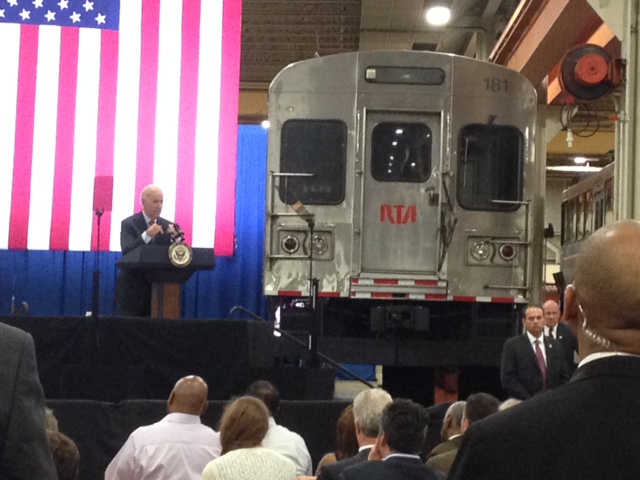
- The Infrastructure Investment and Jobs Act is no new New Deal. The $550 billion in new spending will mostly go to a vast backlog of small projects and deferred maintenance because, for all the damage interstates did to cities, the highway revolts of the 1960s and ’70s had the pernicious side effect of tamping down any appetite for ambition or central planning. (City Lab)
- Transportation data collection and a road-use charge pilot program are two overlooked provisions of the infrastructure package. (Governing)
- The White House wants states to appoint “infrastructure czars” to oversee spending all the cash they’re about to receive. (Route Fifty)
- The Federal Transit Administration is rolling out American Rescue Plan grants, including $6 billion to New York’s MTA (ABC 7), $1.6 billion to New Jersey Transit (Insider) and $1.2 billion to the L.A. Metro (NBC Los Angeles).
- Transit advocates don’t want the L.A. Metro to resume collecting fares in March after two years of being fare-free. (KCRW)
- Maryland’s Purple Line is now four years behind schedule and $1.4 billion over budget. (Washington Post)
- The Memphis Area Transit Authority is exploring ways to extend transit to a nearby Ford plant that will employ 6,000 people. (Commercial Appeal)
- Portland’s Biketown bike-share is expanding into new neighborhoods. (Oregon Public Radio)
- Lime is launching new e-bikes in Washington, D.C. as part of a $50 million expansion. (The Verge)
- Phoenix canceled plans to widen a downtown street and instead will install a protected bike lane after a drunk driver killed a cyclist there. (New Times)
- The transit hub in St. Louis, Grand MetroLink Station, is disconnected from the surrounding community. (St. Louis NPR)
- Ann Arbor officials want to take over state highways within they city because the Michigan DOT won’t let them make safety improvements. (MLive)
- A Duluth, Minnesota, resident is fighting to turn 14-lane I-35 into a six-lane parkway. (Minnesota Public Radio)
- What should Cincinnati do with its 100-year-old abandoned subway tunnels? Wine cellar? Nightclub? What about — hear me out now — mass transit? (The Drive)

Blake Aued has been doing Streetsblog's daily national news digest for years. He's also an Atlanta Braves fan, which enrages his editor in New York.
Read More:
Streetsblog has migrated to a new comment system. New commenters can register directly in the comments section of any article. Returning commenters: your previous comments and display name have been preserved, but you'll need to reclaim your account by clicking "Forgot your password?" on the sign-in form, entering your email, and following the verification link to set a new password — this is required because passwords could not be carried over during the migration. For questions, contact tips@streetsblog.org.
More from Streetsblog USA
‘Diversity’ in Transportation Planning is Under Attack — But These Experts Say It’s More Important Now Than Ever
Minority-owned planning firms are as essential as they ever were, these four top experts argue — no matter what the White House says.

September 23, 2026
Transgender Americans Harassed on Transit at High Rate, But Problem Goes Unrecognized: Study
Nearly 6 in 10 transgender respondents in a new study say that they've faced harassment onboard.

September 23, 2026

Where the Battles Against Harmful Highways and Hyper-Scale Data Centers Collide
Hyperscale AI data centers and highways are both harmful forms of fossil fuel infrastructure that get built without much community input — and it's time to fight back against both, one of our favorite podcasters argues.

September 22, 2026
I Survived the Santa Monica Farmer’s Market Crash
A survivor of a mass casualty reflects on what she's learned about car culture, grief, and resilience.

September 22, 2026

Tuesday’s Headlines Are a Speed Trap
There's a downside to enforcing traffic laws when cities do it to raise revenue rather than to save lives.
September 22, 2026