Mixed Signals: ‘Beg Buttons’ and the Pandemic
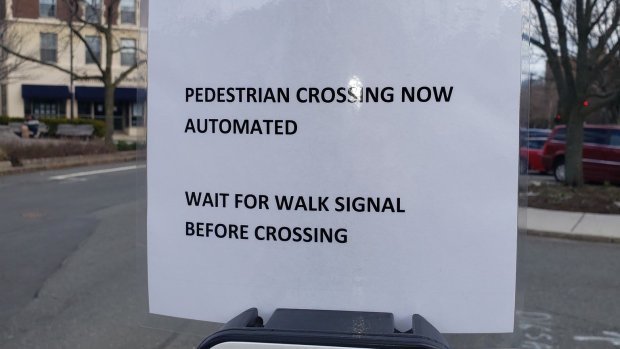
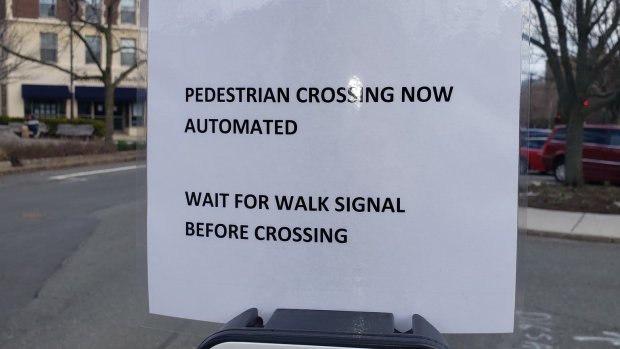
In the past month, several municipalities in the region, including Brookline, Cambridge, Arlington and Providence, RI, have acknowledged the uselessness of push-to-walk buttons at crosswalks, and have reprogrammed traffic lights to make walk signals automatic.
Before the COVID-19 pandemic, those “beg buttons” were merely one of the hundreds of inconveniences that engineers forced upon pedestrians in their self-defeating efforts to facilitate car traffic.
But now, the buttons have taken on a more menacing potential as high-touch surfaces where the new coronavirus could spread.
In late March, the Town of Brookline rapidly reprogrammed dozens of traffic signals to bypass the buttons, and posted signs (pictured above) warning people not to touch them. Cambridge and Arlington followed suit within a few days.
And in early April, the city of Providence, RI announced that its beg buttons would remain deactivated even after the pandemic ends.
Then there are cross-jurisdictional issues: some traffic signals are controlled by local governments, while others (near state highways, which tend to see even heavier traffic) are controlled by MassDOT.
“MassDOT has no plans to eliminate crossing signal buttons on the approximately 1,400 hundred pedestrian cross walk signals it manages statewide,” wrote Kristen Pennucci, the agency’s Communications Director, in an email last week.
“If you can’t change signals now, when are you going to adjust them?” asks Kearney of WalkBoston, who notes that with light traffic and evidence that drivers are speeding more, it’s an ideal time to reprogram traffic signals to give pedestrians more time.
“We should have very short signal cycles so that people don’t have to push a button and don’t have to wait as long, and we should expect people in cars to slow down and stop more often so they’re not flying through intersections,” says Kearney.

Read More:
Streetsblog has migrated to a new comment system. New commenters can register directly in the comments section of any article. Returning commenters: your previous comments and display name have been preserved, but you'll need to reclaim your account by clicking "Forgot your password?" on the sign-in form, entering your email, and following the verification link to set a new password — this is required because passwords could not be carried over during the migration. For questions, contact tips@streetsblog.org.