Scooter Trips Surpass Docked Bike Share for the First Time
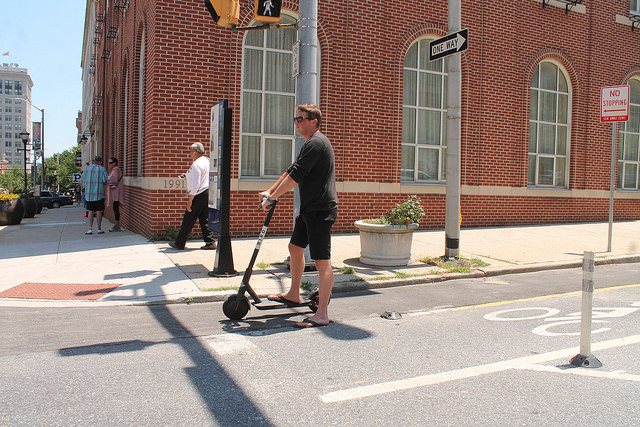
Scooter ridership in America has outpaced traditional docked bike share for the first time, a new report shows.
In 2018, riders took 38.5 million trips on shared e-scooters across American cities, almost doubling ridership over a year and topping the number of trips made on city-sponsored bike share for the first time, according to a new analysis by the National Association of City Transportation Officials. The report comes as e-scooter use and deployment is surging and dockless shared bikes are slowly disappearing, as private shared mobility companies disinvested and shifted money to e-scooters.
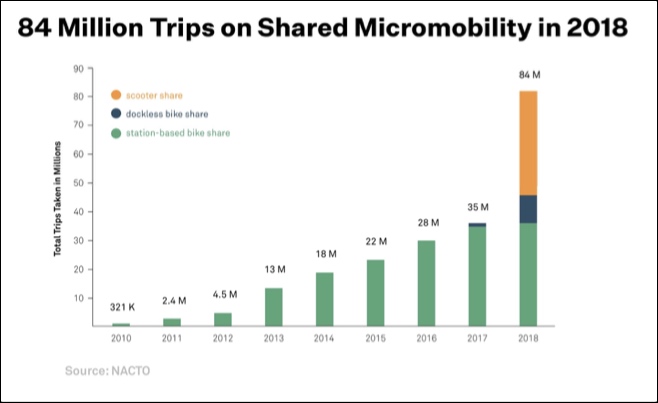
About 36.5 million trips were taken on bike share. Those trips are primarily on just six city-sponsored bike share systems: NYC’s Citi Bike, Boston’s Bluebikes, Chicago’s Divvy, D.C.’s Capital Bikeshare, Honolulu’s Biki and the Bay Area’s Ford GoBike. Together, these accounted for 84 percent of all docked bike share trips, with Citi Bike comprising almost half.
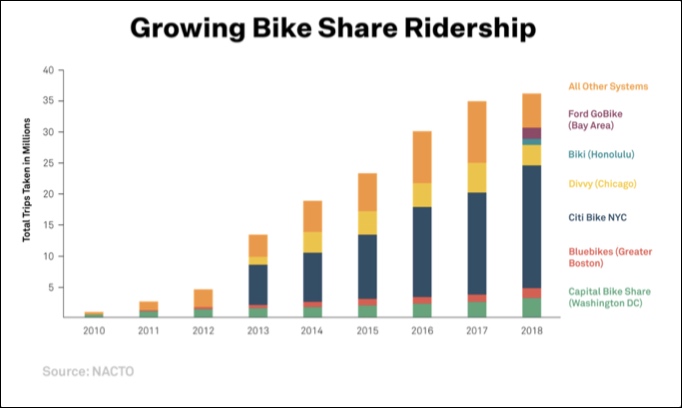
Only 3 million trips were taken on pedal dockless bike share, as companies like ofo and Lime shifted their investments toward scooters or, in ofo’s case, got out of American micro mobility almost entirely.
The NACTO analysis did show evidence of big demand for e-bikes, although they were only available in a few limited locations in 2018, including New York and San Francisco. The report confirms what Citi Bike officials have long said: e-bikes tend to be borrowed many more times per day than a regular pedal bike — an average of an astounding 15 times a day in New York City vs. about five per day for the regular bike.
People paid about the same amount of money to rent e-scooters vs. docked bikes, with e-scooters averaging about $3.50 per trip and the cheapest being docked bike share trips made by members at $1.25 per trip.
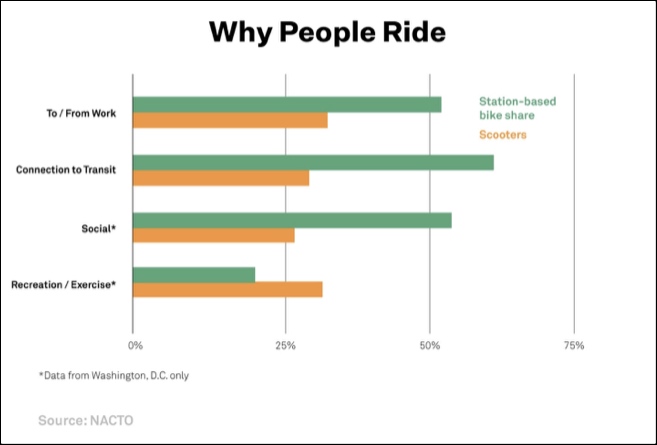
Docked bike share was most likely to be used for commuting or transit connections. But a healthy number of scooter trips are also used for those purposes as well, NACTOs estimates show.
“Shared micromobility is one of the most energy and carbon-efficient modes of travel, and its rapid growth provides an opportunity to reduce emissions faster,” Linda Fedirko, senior program associate of Climateworks Foundation, said in a statement. “This mode is also showing early promise of addressing last-mile connectivity gaps in cities, and enabling the reallocation of public space for shared and active mobility.”
One note: several cities stopped expanding or investing in docked bike share when dockless arrived a few years ago. A few cities, such as Boston, New York and the Bay Area, have forged ahead anyway.

Read More:
Streetsblog has migrated to a new comment system. New commenters can register directly in the comments section of any article. Returning commenters: your previous comments and display name have been preserved, but you'll need to reclaim your account by clicking "Forgot your password?" on the sign-in form, entering your email, and following the verification link to set a new password — this is required because passwords could not be carried over during the migration. For questions, contact tips@streetsblog.org.