New Orleans’ Lafitte Greenway: A Community Link, Not a Barrier

Unlike urban freeways, which have the sometimes deliberate effect of separating neighborhoods from one another, New Orleans is finding that an off-street path seems to be doing the opposite.
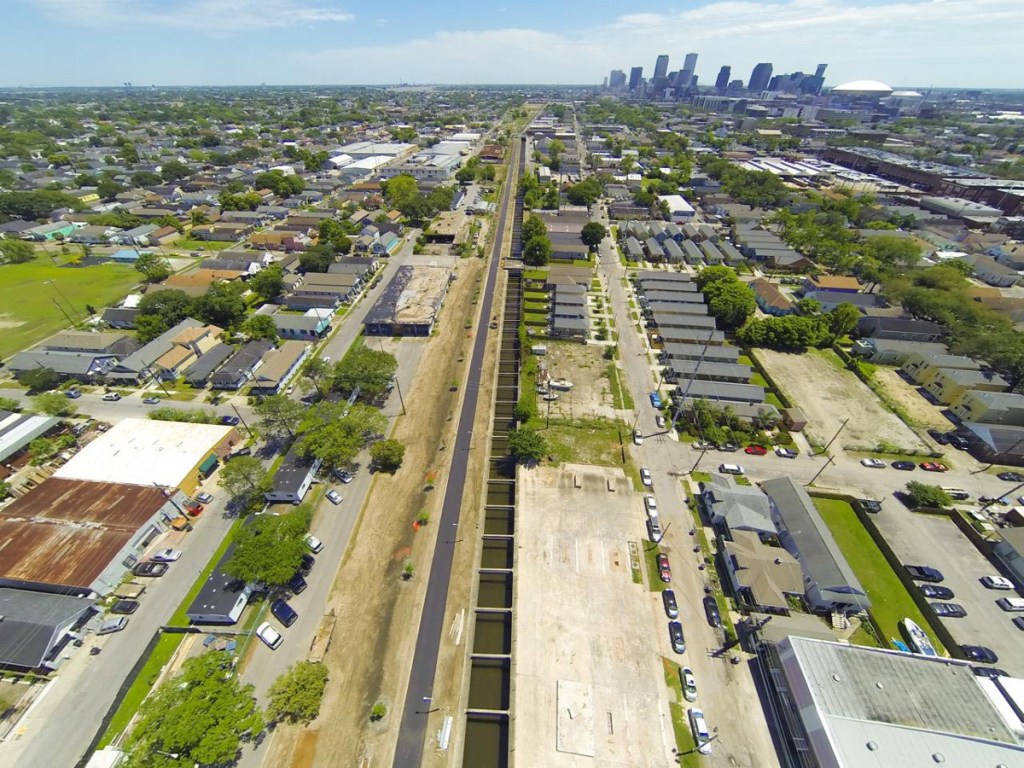
The city’s Lafitte Greenway, a converted railway that opened just north of downtown in 2015, has become a common road for people of many backgrounds, CityLab reported Tuesday.
Today the Lafitte Greenway is a 2.6-mile walking and biking trail connecting six diverse neighborhoods in the heart of New Orleans, from the French Quarter, where tourists congregate on Bourbon Street, to the city’s bayous, where locals chill and host crawfish boils during the spring. Along the way, the greenway passes through the upper-middle-class streets of Mid-City, past a neighborhood made up of Section 8 public housing, past the historically African American music-drenched neighborhood Tremé, and finally, into the French Quarter.
It’s that connectivity across socioeconomic lines that greenway supporters say helps Lafitte stand out from other bike paths around the country. Indeed, on any given day along the greenway, you can see hipsters on expensive fixed-gear bikes zoom past young musicians carrying instrument cases on their way to gigs in the Quarter. While in other cities some principal bike paths are geographically confined to well-off neighborhoods, in New Orleans the path runs through them all.

The Times-Picayune reported last winter that the greenway also seems to be motivating nearby real estate investment. Crucially, that includes new housing for people of various income levels, hopefully offering a buffer against possible displacement:
[Lafitte Greenway’s] urban landscape is evolving this year with real estate investors pushing a wave of new development connected to the greenway — including proposals for a patio bar, hundreds of apartments, at least one coffee shop and co-working office space, all with direct access to the path and the possibility of making the 14-month-old park a busier public space.
Investments like those are one of the reasons the Lafitte Greenway is an important spine in New Orleans’s developing central-city biking network, which the city hopes will improve transportation and recreation for all the users seen today on the Greenway. In the next few years, the city aims to extend the bikeway across Rampart Street into the French Quarter, creating a link with Baronne Street south through downtown.

Meanwhile, on Tuesday afternoon another mile to the north of the Lafitte Greenway, advocacy group Bike Easy was celebrating a pop-up protected bike lane demonstration on St. Bernard Ave. at Villere Street, another route into downtown that could eventually link up with Baronne and the rest of the central network.
“St. Bernard Avenue is a crucial connection for residents of the 7th Ward and Gentilly to job centers downtown,” Bike Easy said in its article about Tuesday’s event. “Health outcomes in much of the 7th Ward need to be improved, and making walking and biking easy options can help reduce health disparities.”
In that way, too, New Orleans is hoping bike infrastructure will have the opposite effect of the city’s urban freeways.
PlacesForBikes is a PeopleForBikes program to help U.S. communities build better biking, faster. You can follow them on LinkedIn, Twitter or Facebook or sign up for their weekly news digest about building all-ages biking networks.

Read More:
Streetsblog has migrated to a new comment system. New commenters can register directly in the comments section of any article. Returning commenters: your previous comments and display name have been preserved, but you'll need to reclaim your account by clicking "Forgot your password?" on the sign-in form, entering your email, and following the verification link to set a new password — this is required because passwords could not be carried over during the migration. For questions, contact tips@streetsblog.org.