What the Data Tell Us About Bicycling and Household Income in America



Michael Andersen blogs for The Green Lane Project, a PeopleForBikes program that helps U.S. cities build better bike lanes to create low-stress streets.
As part of the Green Lane Project’s upcoming report on the connection between transportation equity and protected bike infrastructure, I’ve been digging deeper into the difference between (as Veronica Davis put it last month) “biking for transportation and biking for biking.” How much do people bike because they need to get somewhere, and how much do they bike for fun? Because biking can play such a useful role in freeing low-income people from the pressure to prioritize car ownership, we’re especially interested in the ways this differs among people of different incomes.
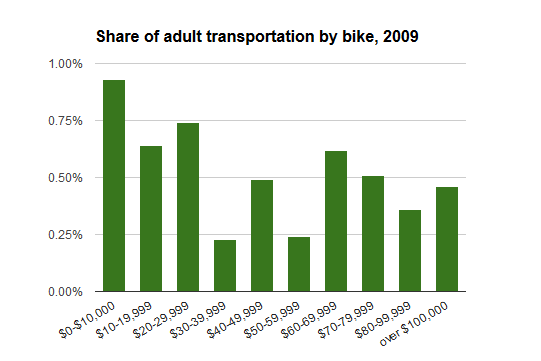
In the United States, the best data we have on this question comes from the National Household Travel Survey, most recently in 2009. Here’s what it tells us about the household incomes of people who are taking bike trips for non-recreational transportation:
And for recreational trips (which, to be clear, include both riding for fun and riding to meet a friend for lunch):
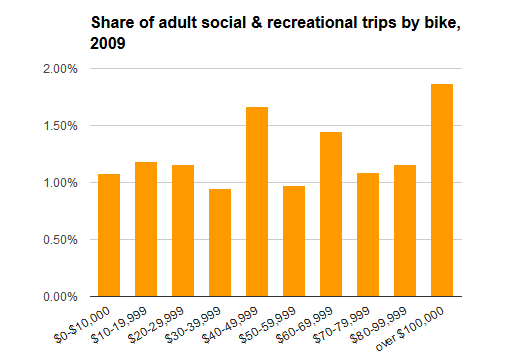
Though there are discernible spikes in both of these charts — poorer households are most likely to bike for transportation (which is something we also see in commuting data), while the richest households are the most likely to take a recreational bike trip — there’s also plenty of variation that doesn’t fall neatly along a slope.
You may have noticed something else about this data: In every category listed here, fewer than 1 in 50 trips is happening on a bicycle.
What do these charts look like in a country that uses protected bike lanes and other infrastructure to make biking safe and comfortable? I’ll be sharing that comparison (for what I think may be the first time ever) in an upcoming post.
You can follow The Green Lane Project on Twitter or Facebook or sign up for its weekly news digest about protected bike lanes.

Streetsblog has migrated to a new comment system. New commenters can register directly in the comments section of any article. Returning commenters: your previous comments and display name have been preserved, but you'll need to reclaim your account by clicking "Forgot your password?" on the sign-in form, entering your email, and following the verification link to set a new password — this is required because passwords could not be carried over during the migration. For questions, contact tips@streetsblog.org.