Engineering Establishment Poised to Endorse Bike Boxes and Bike Signals
Bike boxes and bike traffic signals are becoming increasingly common in American cities. But as of yet, these tools are not fully recognized by one of the country’s most important engineering guides.
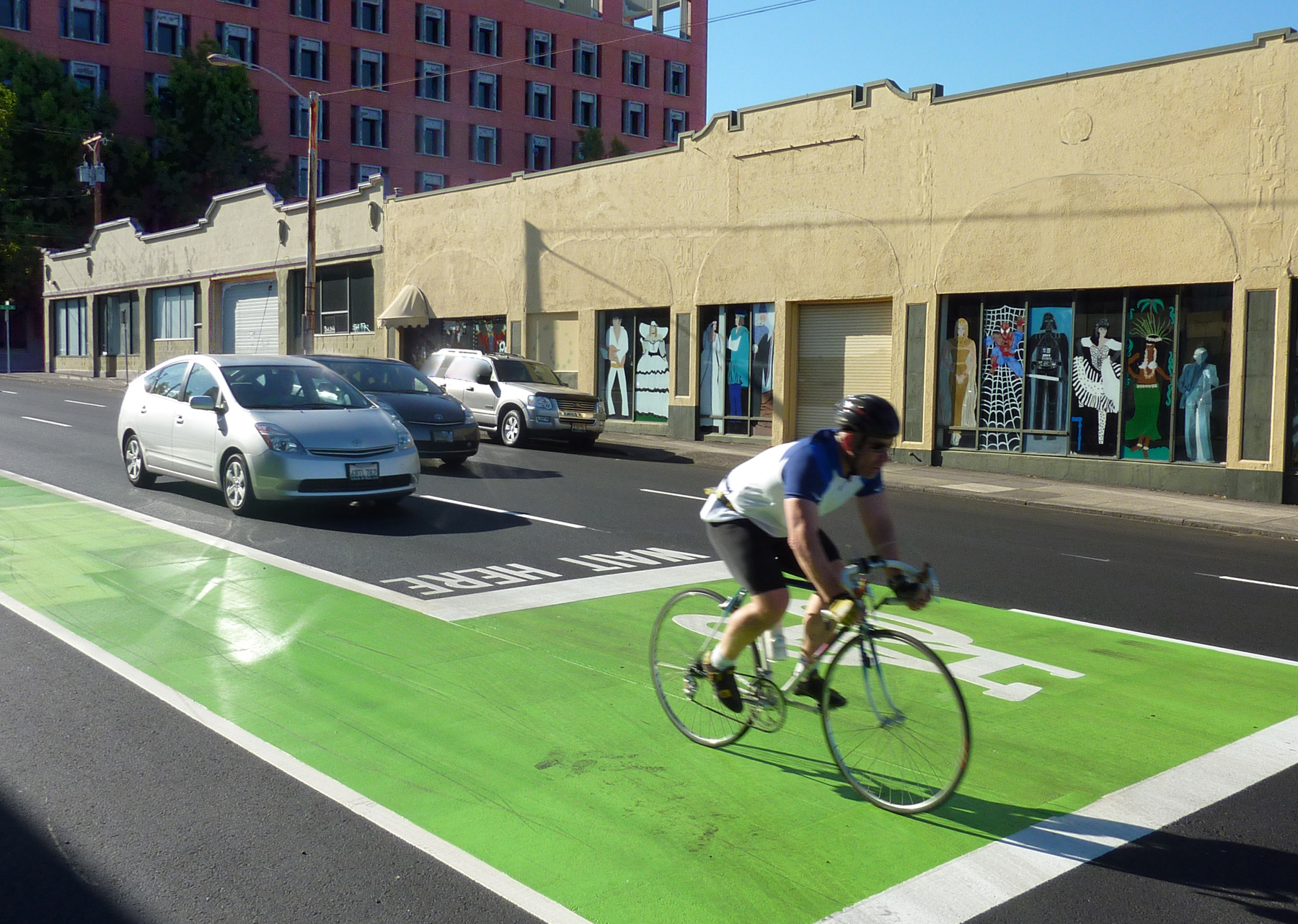
Bike boxes and bike signals are currently classified as “experimental” in the Manual on Uniform Traffic Control Devices — which stops many local agencies from installing them. But there are new signs that these two treatments are on their way to official acceptance from the engineering establishment.
The MUTCD is developed and revised by an advisory group called the National Committee on Uniform Traffic Control Devises. When that committee meets for its annual meeting in January, one of the recommended updates they’ll be considering is elevating bike boxes and bike signals to regular, non-experimental status in the MUTCD.
Ronnie Bell, chair of the Signals Subcommittee, and Bill Schultheiss, of the Bicycle Subcommittee, both confirmed that their groups were forwarding these treatments to the full committee for approval after reviewing the performance data in American cities.
In order to receive “interim non-experimental approval,” these recommendations will need to receive two-thirds support from the full NUTCD committee. In addition, the proposed changes must still undergo review by AASHTO and the Institute of Transportation Engineers, followed by a “rule-making period” during which design recommendations are fine-tuned.
MUTCD approval “gives cities interested in these tools permission to use them,” said Darren Flusche, policy director at the League of American Bicyclists. “It will help traffic engineers in those cities sleep easier at night knowing that the treatment is officially approved.”

Read More:
Streetsblog has migrated to a new comment system. New commenters can register directly in the comments section of any article. Returning commenters: your previous comments and display name have been preserved, but you'll need to reclaim your account by clicking "Forgot your password?" on the sign-in form, entering your email, and following the verification link to set a new password — this is required because passwords could not be carried over during the migration. For questions, contact tips@streetsblog.org.