

Today’s Headlines
LaHood Tells Govs: “Congress Needs to Find $500 or $600 billion and Pass a 5-Year Bill” (Detroit News) LaHood Promises $185M in Federal Funds For New York Gateway Project (Railway Gazette) NHTSA Looks to Future of Self-Driving Cars, Seeks to Regulate It (LAT) More Crumbling Bridges, This Time Over the Columbia Gorge (Boise Weekly) Moscow, … Continued

By
Tanya Snyder
8:53 AM EDT on June 3, 2013
- LaHood Tells Govs: “Congress Needs to Find $500 or $600 billion and Pass a 5-Year Bill” (Detroit News)
- LaHood Promises $185M in Federal Funds For New York Gateway Project (Railway Gazette)
- NHTSA Looks to Future of Self-Driving Cars, Seeks to Regulate It (LAT)
- More Crumbling Bridges, This Time Over the Columbia Gorge (Boise Weekly)
- Moscow, With New Bike-Share, Struggles to Get Cyclists Out in a City Still Unsafe for Cyclists (Rappler)
- Aspen Bike-Share Opens This Week (ABC7)
- Good Encourages Readers to Commit to Car-Free Days
- How Toronto Came to Be Ruled By City-Hating, Right-Wing Suburbanites (Star)
- UPS and FedEx Have Racked Up More Than $5.5 Million in Parking Tickets Since 2011 (WaPo)
- West Texans Say They’d Ride the Bus If They Knew the Schedule, Saw More Ads (CBS7)
- The Nation Digs Through Its Archives to Find the Last Golden Age of Bicycles
- Cities With Less Driving Have More Potential for Social Interaction (Fast Company)

Tanya became Streetsblog's Capitol Hill editor in September 2010 after covering Congress for Pacifica Radios Washington bureau and for public radio stations around the country. She lives car-free in a transit-oriented and bike-friendly neighborhood of Washington, DC.
Read More:
Streetsblog has migrated to a new comment system. New commenters can register directly in the comments section of any article. Returning commenters: your previous comments and display name have been preserved, but you'll need to reclaim your account by clicking "Forgot your password?" on the sign-in form, entering your email, and following the verification link to set a new password — this is required because passwords could not be carried over during the migration. For questions, contact tips@streetsblog.org.
More from Streetsblog USA
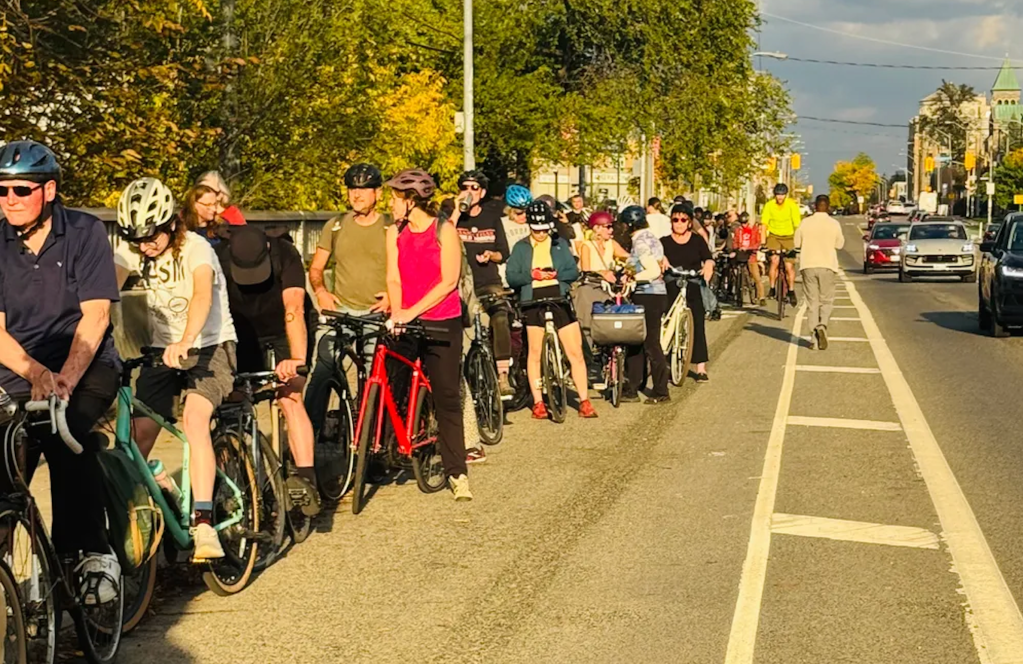
‘Premeditated Road Violence’: Toronto Protestors Block Bike Lane Removal
Toronto advocates are putting their bodies on the line to protect a bike lane the province wants to rip out — and and to fight a wave of anti-bike lane sentiment that this writer warns is sweeping the whole continent.

October 21, 2026
Take a Risk on Wednesday’s Headlines
Transit agencies that bet on high diesel costs are reaping rewards, but the strategy doesn't always work out.

October 21, 2026
Why US Roads Are Full of SUVs and Trucks, Part II
Yesterday, we looked at how SUVs and pick-ups captured the new car market. Today, let's talk about how they captured the used car market as well.

October 21, 2026
When Are Parking Debates Just A Smokescreen for Hate?
A new paper finds that mosques are more likely to face pushback over parking than other houses of worship. What should planners do about it?

October 20, 2026

Tuesday’s Headlines Do the Robot
Cities and states are filling the void, but the feds really need to step in to set rules for autonomous vehicles.
October 20, 2026
