GOP Gov Rick Snyder Has a Plan to Expand Michigan Transit — and Pay For It
It’s common knowledge that the gas tax is too low to pay for transportation infrastructure needs. But nobody’s holding their breath for Washington to solve the problem. If you’re looking for leadership on transportation, maybe the better place to look these days is Michigan.
Transportation for America and the Detroit Free Press are reporting that Michigan’s Republican governor, Rick Snyder, has laid out a vision for expanded transit — and he’s got a plan to finance it as well.
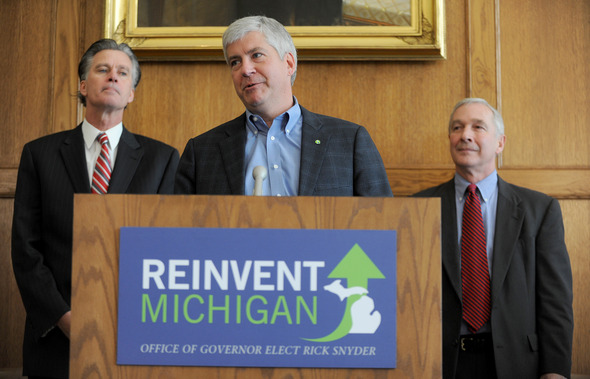
Snyder is calling on the state legislature to approve a proposal that would allow local municipalities to raise their vehicle licensing fee to a rate between $40 and $120, depending on the vehicle. That could raise between $300 million and $1 billion for infrastructure and transit projects in the Wolverine State.
In addition, the governor has put forward a plan that would restructure the state’s gas tax as a percentage of the price of fuel.
The governor hopes to use some of the revenues to expand bus rapid transit in coordination with Detroit’s planned Woodward light rail corridor, according to T4A.
Transportation reform is a important priority, not so much a partisan issue, for officials across the state of Michigan, explained Matt Bach, a spokesman for the Michigan Municipal League. But reporters at the Free Press still questioned whether the state’s Republican legislators would get behind the plan.
“For almost 50 years the state of Michigan was sort of seen as the forerunner of the whole transportation system with our interstate system,” Bach told Streetsblog.
Now the state’s transportation system is outdated, repelling talent, businesses, and investors from Michigan. Transit improvements, particularly, “would create thousands of jobs, generate billions of dollars in new private sector investments, and help create the types of urban centers where young, talented, creative, college-educated people want to live, work and raise families,” the League stated in a press release.
League President Karen Majewski — mayor of the small city called Hamtramck that is surrounded by the city of Detroit — joined others in praising the news.
“In a community like Hamtramck, it’s highly important to have regional mass transit options as part of an economic development strategy,” she said. “The local option aspect to this plan would allow our communities to identify and develop transportation options that will fit their needs, encourage economic growth, and attract and retain knowledge-based workers who demand this as part of their lifestyle.”

Read More:
Streetsblog has migrated to a new comment system. New commenters can register directly in the comments section of any article. Returning commenters: your previous comments and display name have been preserved, but you'll need to reclaim your account by clicking "Forgot your password?" on the sign-in form, entering your email, and following the verification link to set a new password — this is required because passwords could not be carried over during the migration. For questions, contact tips@streetsblog.org.