Columbus Sprawls Through Malls

Columbus, Ohio, believe it or not, is a retail Mecca. The town is home to the corporate headquarters of Limited Brands, Abercrombie & Fitch, Bath & Body Works and Victoria’s Secret. So it’s no surprise that malls figure prominently in the local economy. For decades they have guided development further and further from the core of the city.
Decades ago Columbus was served by a downtown mall — City Center — and malls in its west, north and east neighborhoods: Northland, Westland and Eastland. But in the ’90s, developers built three new malls around the city’s outerbelt. Tuttle Crossing, Polaris Mall and Easton were truly suburban malls, built in newer, car-centric suburbs.
When the new malls went up, the old malls foundered. Columbus recently tore down its City Center mall and is replacing it with a $25 million park. Northland was razed years ago as well. Wikipedia calls Westland a “dead mall that is still open to the public.” It hosts gun shows on a regular basis.

To make matters worse, when each of these malls closed, they brought their neighborhoods down with them. The streets that once served Northland have become a center for prostitution. In 2009, the Associated Press reported that the neighborhood surrounding Westland mall was one of the country’s emptiest. Only Eastland ducked the trend by orienting itself toward bargain stores.
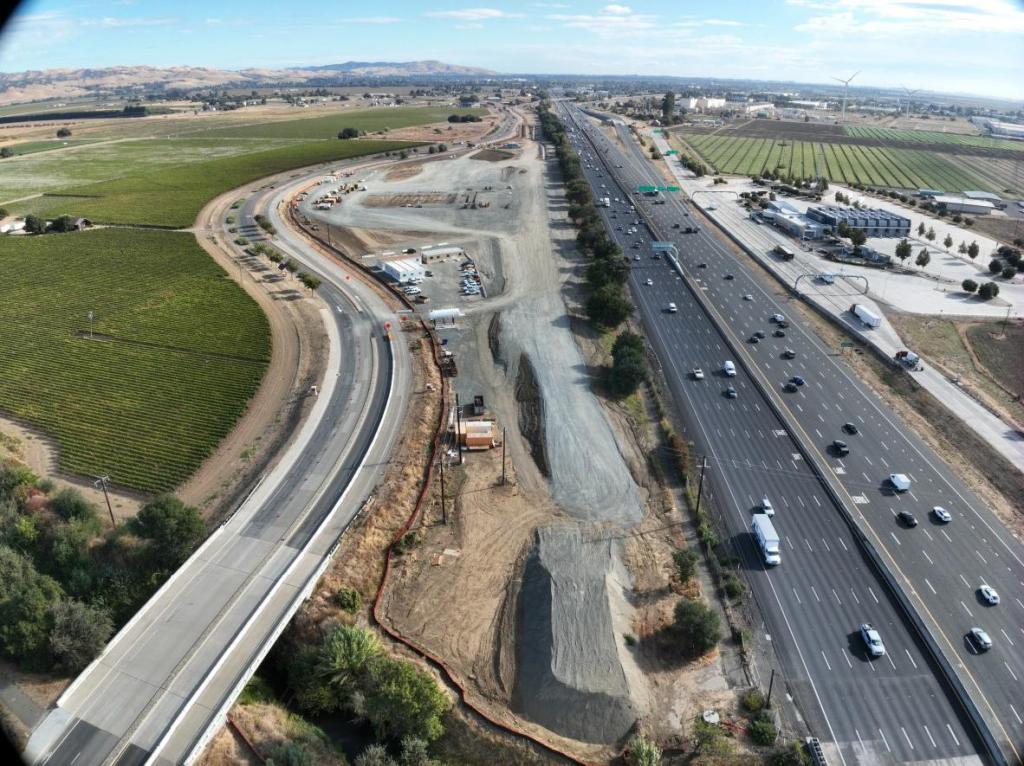
Naturally, what the Columbus area needs now is more malls. And Network blog Xing Columbus reports that officials in exurban Delaware County are stepping up with plans for a new interchange on I-71 to serve a retail center that has been characterized as “a more-diverse Polaris.” The Columbus Dispatch is dutifully repeating claims that “the local economy could reap $965 million.”
John Wirtz at Xing Columbus had this to say:
A “more diverse Polaris.” That’s how the Director of Economic Development in Delaware County envisions the land development resulting from a new interchange either north of or south of 36/37 in Delaware County. I’m not sure exactly what that means, but I’m imagining another shopping mall, huge offices, and big box retail separated by wide, high-speed roads with no sidewalks, now with a token residential component to be “more diverse.”
Does anyone actually think that this is an efficient way to organize our built environment?
The truth is this development won’t create almost a billion dollars in new economic activity. Some older mall or retail center will be closed: maybe struggling Polaris. The new interchange will simply transfer commerce further from municipal boundaries onto undeveloped farmland.
Not only will taxpayers be asked to foot the cost of expanding I-71, they will be asked to clean up the wreckage left behind, the way they have with a $165 million commitment at City Center and millions more for demolition and redevelopment at the Northland site.
What will taxpayers have to show for their investment in a new retail center for Delaware County? Columbus will have a larger carbon footprint. There will be less farmland. The central city will be weaker. More people will be utterly dependent on cars. Oh, and a few developers will have made a lot of money.
Elsewhere on the Network today: Great news out of Michigan, where transit advocates have reversed a measure that would have robbed up to $20 million from the state’s transit coffers, reports Transport Michigan. Meanwhile, according to Charlottesville Tomorrow, Tea Partiers in Virginia have raised objections to the region’s $1 million sustainable communities planning effort, saying it is part of a United Nations conspiracy.

Read More:
Streetsblog has migrated to a new comment system. New commenters can register directly in the comments section of any article. Returning commenters: your previous comments and display name have been preserved, but you'll need to reclaim your account by clicking "Forgot your password?" on the sign-in form, entering your email, and following the verification link to set a new password — this is required because passwords could not be carried over during the migration. For questions, contact tips@streetsblog.org.