

Friday’s Headlines Stay in Our Lane
It's not that hard. If you're a driver, pay attention, and when you see a bollard or a Jersey barrier in front of you, just don't hit it.
By
Blake Aued
12:00 AM EDT on March 31, 2023
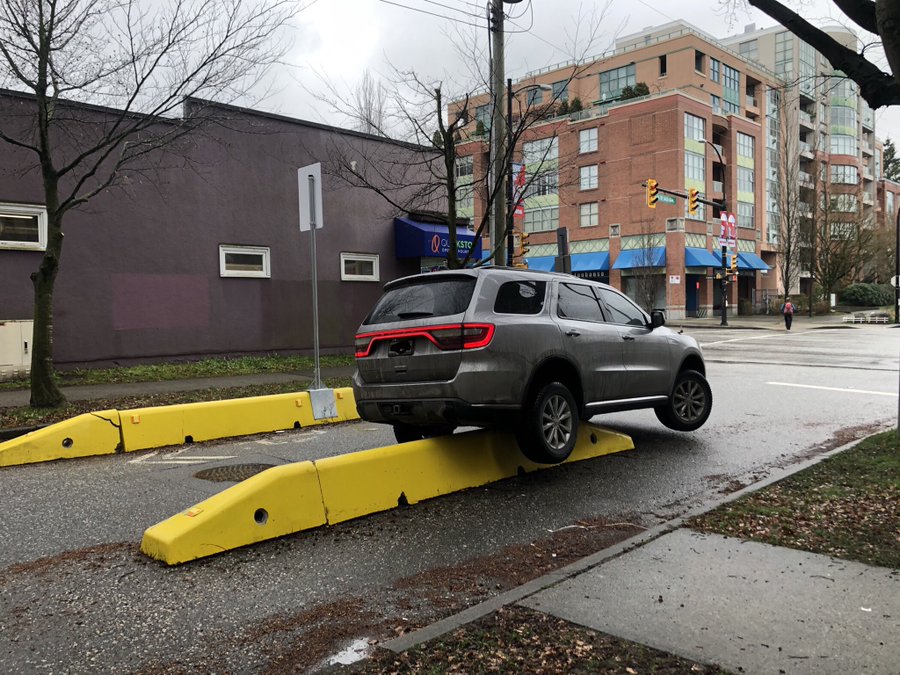
- Lots of motorists out there are telling on themselves, blaming bike infrastructure for the fact that they don’t know how to drive. (Jalopnik)
- Speaking of bad drivers, there’s a very good reason why Elon Musk is fearmongering about artificial intelligence: He wants to draw attention away from Tesla’s failed efforts at self-driving cars. (Slate)
- The Biden administration’s infrastructure package laudably included $1 billion to start undoing the damage of 1960s and ’70s urban freeways. Unfortunately, it’s also letting states spend billions more to build new divisive freeways. (City Lab)
- In his new book “Carmageddon: How Cars Make Life Worse and What to Do About It,” Economist editor Daniel Knowles shows how cars pollute the air, take up too much space and kill too many people. (Washington Post)
- Lyft is losing the ride-hailing war to Uber despite casting itself as the “good guy” amidst Uber’s numerous PR missteps. (CNN)
- Lowering speed limits reduces crash injuries by a fifth, according to an Insurance Institute for Highway Safety study in Seattle.
- Illinois lawmakers are looking for “bold” solutions to the Chicago Transit Authority’s looming fiscal cliff. (Governing)
- Portland’s chief bike planner theorizes that commuting by bike is falling despite the city’s relatively robust bike infrastructure because bike commuters are being pushed out and wealthier newcomers don’t know about the bike facilities available. (Bike Portland)
- Parking lots cover two-fifths of Arlington, a quarter of Dallas, Houston and San Antonio, and a sixth of Austin. (D Magazine)
- Plans to expand Milwaukee’s streetcar are in limbo with no federal, state or local funds attached. (Wisconsin Public Radio)
- In a survey of Richmond residents who receive social services, almost three-quarters said they don’t drive, and 60 percent said they feel unsafe while biking or walking. (Richmond News)
- Toledo, where drivers kill 32 people every year, is investing $1 million to eliminate traffic deaths by 2031. (ABC 13)
- Louisville has completed only two of eight corridors and four of 30 intersections targeted for Vision Zero improvements. (WAVE)
- A Salt Lake Tribune column makes the case for tapping into federal street safety funds.
- Bike licensing is and always has been a very dumb idea. (Outdoors)

Blake Aued has been doing Streetsblog's daily national news digest for years. He's also an Atlanta Braves fan, which enrages his editor in New York.
Read More:
Streetsblog has migrated to a new comment system. New commenters can register directly in the comments section of any article. Returning commenters: your previous comments and display name have been preserved, but you'll need to reclaim your account by clicking "Forgot your password?" on the sign-in form, entering your email, and following the verification link to set a new password — this is required because passwords could not be carried over during the migration. For questions, contact tips@streetsblog.org.
More from Streetsblog USA
Study: The Missing Ingredient in the Fight To End Car Crash Deaths is… Fewer Cars
The common denominator in every car crash is a car. So why don't we talk about it?

October 27, 2026
Op-Ed: Toronto’s Bike Lane Fight Should Be a Wake Up Call for the US, Too
The people of Toronto have shown up big to protect their bike lanes from removal. Will Americans stand with them?

October 27, 2026
Six Days on the Road and Tuesday’s Headlines May Not Make It Home Tonight
Jalopnik points out that there are certain vehicles that average people have no business driving.
October 27, 2026

Why Deadly, Illegal E-Motos Are On The Rise – And Why E-Bikes Are Being Blamed When They Crash
...and what we can do to protect our kids *and* the e-bike revolution.
October 26, 2026
Monday’s Great Smokey Headlines
While other countries work to reduce greenhouse gas emissions, the U.S. is moving in the opposite direction.
October 26, 2026
