U.S. Traffic Fatalities Rising Fast — Especially Pedestrian and Cyclist Deaths
Traffic fatalities in America hit a seven-year high in 2015, with pedestrians and cyclists accounting for a disproportionate share of the alarming increase, according to preliminary data from the National Highway Traffic Safety Administration.
Last year, 35,200 people were killed in traffic — a 7.7 percent increase over 2014 and the worst death toll since 2008. The number of people killed while walking or biking is rising even faster.
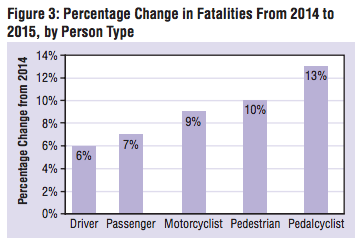
Pedestrian deaths shot up 10 percent last year and bicyclist deaths 13 percent — more than other types of victims, according to NHTSA. The agency did not break down these categories by number.
Driving increased in 2015 too, but by 3.5 percent — not enough to explain the rising death toll.
People walking or biking have accounted for a growing share of total traffic deaths since 2007, and there is little agreement about the underlying causes. In addition to the usual rush to blame victims by invoking “distracted walking,” theories include increases in biking and walking overall, driver distraction, and low gas prices promoting more “marginal” drivers like teenagers, who are more crash prone. (The NHTSA report says crashes involving young drivers — ages 15 to 20 — increased 10 percent in 2015.)
One thing is clear, however: The United States is falling further behind other nations that have sustained impressive reductions in traffic fatalities. While countries like the UK, Japan, and Germany achieve rapid improvements in street safety, America has failed to keep people safe on the streets.
Transportation Secretary Anthony Foxx, for his part, rejected the idea that traffic deaths are to be expected or tolerated. “Every American should be able to drive, ride or walk to their destination safely, every time,” he said.
But the NHTSA’s statement on the findings illustrates the agency’s institutional limitations when it comes to addressing street safety. In response to the increase in traffic deaths, the NHTSA says it will promote some car technology solutions like automatic braking. But the agency doesn’t mention systemic threats to people walking and biking, like streets designed for excessive motorist speeds.

Read More:
Streetsblog has migrated to a new comment system. New commenters can register directly in the comments section of any article. Returning commenters: your previous comments and display name have been preserved, but you'll need to reclaim your account by clicking "Forgot your password?" on the sign-in form, entering your email, and following the verification link to set a new password — this is required because passwords could not be carried over during the migration. For questions, contact tips@streetsblog.org.