

Congestion
Basics
Uber and Lyft Are Cannibalizing Transit in Major American Cities
New research from UC Davis shows that cities must strengthen transit in response to the growth of ride-hailing services.

October 13, 2017

Yet Another Flawed Congestion Report From Inrix
Do the costs of congestion outweigh the costs of building wider roads? Probably not. Despite an impressive amount of data, Inrix falls into the same old traps with its congestion report.

February 28, 2017
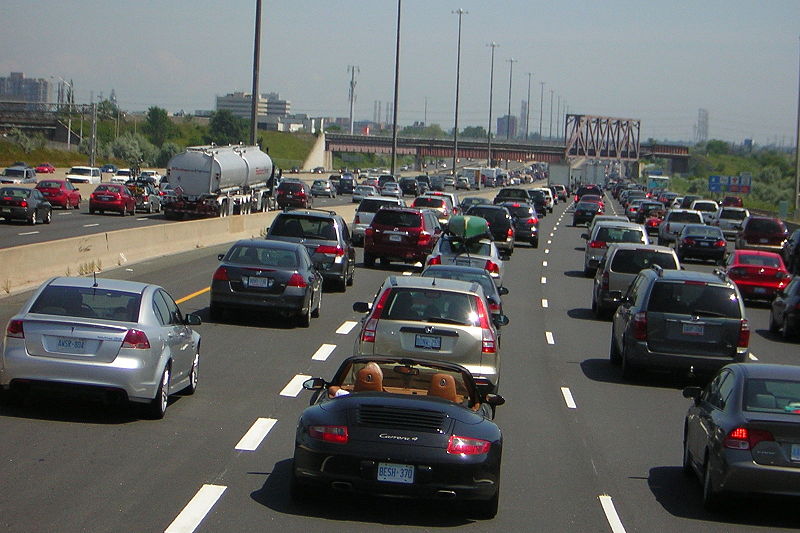
Transportation Agencies Will Finally Measure the Movement of People, Not Just Cars
Hundreds of billions of dollars have been spent in the quest for free-flowing vehicular traffic. The result is wider highways, more sprawl, and more people stuck in congestion. But this week U.S. DOT took an important step to change course, releasing new standards to guide how transportation agencies measure their performance. Advocates for transit and walkability say the policy is a significant improvement.
January 12, 2017
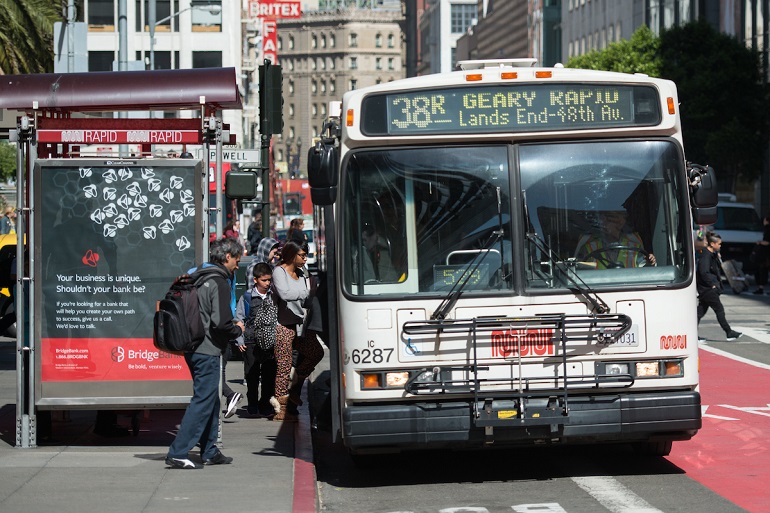
Study: D.C. Bike-Share Cut Neighborhood Congestion 4 Percent
Researchers have released new findings that suggest a more consistent traffic-reduction impact than previously thought.
January 9, 2017
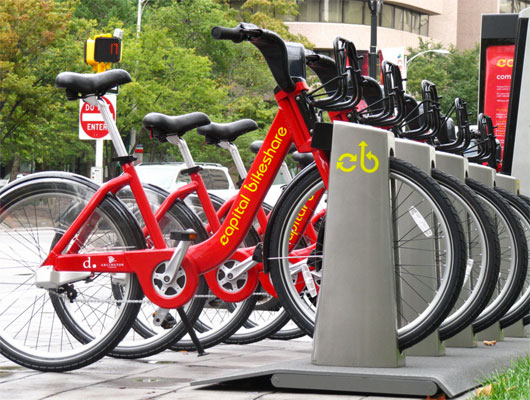
No, Giant Shared Ubers Aren’t About to Solve City Traffic Problems
MIT researchers got a ton of press for a mathematical model that showed sharing for-hire vehicles could replace 85 percent of New York City's taxi fleet. But their conclusions were built on shaky assumptions, says economist Joe Cortright.
January 6, 2017
U.S. DOT Blows Chance to Reform the City-Killing, Planet-Broiling Status Quo
The Obama administration purportedly wants to use the lever of transportation policy to reduce greenhouse gas emissions, and Transportation Secretary Anthony Foxx recently said he'd like to reverse the damage highways caused in urban neighborhoods, but you'd never know that by looking at U.S. DOT's latest policy prescription.
April 19, 2016
What If We Measure Streets for Walking the Way We Measure Streets for Cars?
"What you measure is what you get," the saying goes. In transportation, the dominant metrics are all about moving motor vehicle traffic, so America has built a transportation network that moves a lot of cars. Our streets may be dangerous, expensive, and inefficient, but they do process huge volumes of motor vehicles.
April 4, 2016
Another Tall Tale About Congestion From the Texas Transportation Institute
Crossposted from City Observatory.
August 26, 2015
Great Cities Don’t Have Much Traffic, But They Do Have Congestion
Here's a great visualization of what cities get out of the billions of dollars spent on highways and road expansion: more traffic.
October 31, 2014
Bike Lanes Don’t Lead to Congestion, But Some of Them Should
Gretchen Johnson and Aaron Johnson have posted a nice debunking of typical "war on cars" rhetoric over at fivethirtyeight.
April 11, 2014