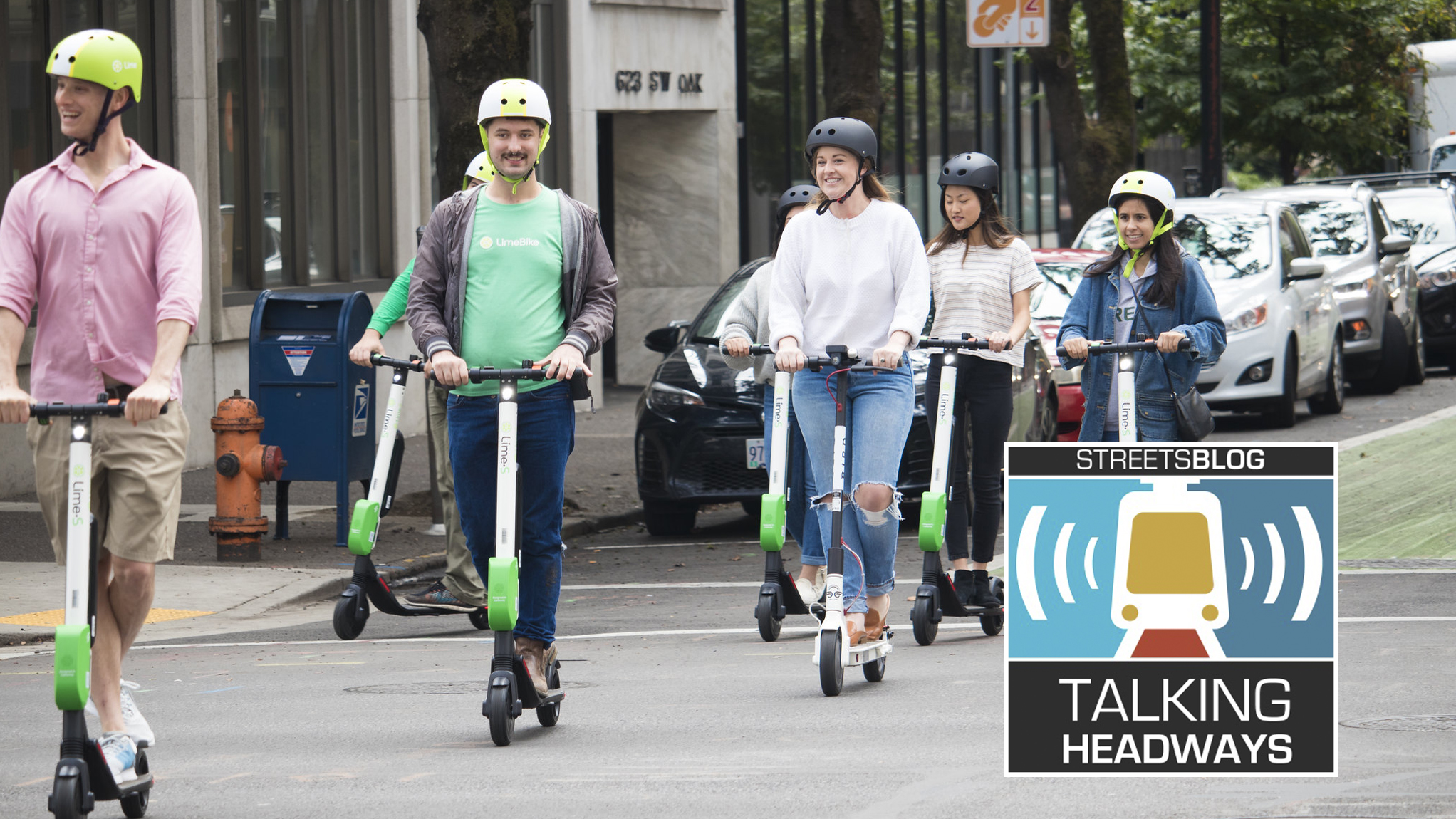
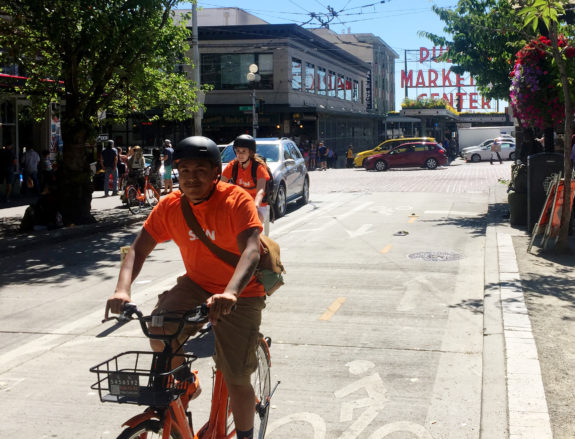
Eight months after Seattle's publicly-funded bike-share system, Pronto, folded under financial pressure, bike-share in the city is back and growing as private companies deploy dockless systems.
One of the oft-mentioned culprits in Pronto's flop was Seattle's all-ages mandatory helmet law and a requirement that helmets be provided for every bike-share trip. The helmet law is still in place, but the private companies aren't subject to mandatory helmet provision. If two public health researchers get their way, however, that could change.
Frederick P. Rivara and Janessa Graves, authors of a disputed study about the safety impact of helmet requirements, recently published a piece in Crosscut urging Seattle to compel the companies to provide helmets. As Tom Fucoloro points out at Seattle Bike Blog, the researchers' raw data actually showed a decline in total bike injuries after cities launched bike-share -- a finding that could support the idea of "safety in numbers." But Rivara and Graves emphasized that the proportion of head injuries was higher in bike-share cities, even though total head injuries declined.
Fucoloro says the emphasis on helmet use ignores the unintended consequences on the safety of cycling:
The worst part about focusing on helmets is that such a requirement puts the viability of bike share at risk. This is not a hypothetical statement. It already happened once in this town.
Here’s some data: 100 percent of U.S. bike share systems required to provide helmets with every bike and operating in counties with all-ages helmet laws have lost money and closed down. Because Pronto was the only one.
(Helmets were not the only cause of Pronto’s demise, but they contributed to the budget crisis that sunk the system both in terms of helmet costs and in terms of decreased ridership.)
Bike share could be a big part of a transportation shift in our city that leads to big public health benefits not only for the users of the bikes but for others around them. As the population grows and congestion gets worse, Seattle and King County must provide new options for people trying to get around. Transportation is our region’s biggest creator of air pollution (which causes all kinds of serious localized health issues) and greenhouse gas emissions (a public health problem on a global scale). And physical inactivity is a major contributor of all kinds of debilitating and fatal health issues.
Bike share will not solve any of these issues alone, of course. But it is a part of the solution.
More recommended reading today: Bike Portland reports that Portland City Commissioner Dan Saltzman will call for congestion pricing on a section of I-5 before shovels go in the ground to widen the road. And Modern Cities profiles a rare type of place in Florida -- a walkable neighborhood.