Skip to Content
Streetsblog USA home
Log In
Bicycle Infrastructure

El Paso’s Bid to Create a Regional Active Transportation Network

A lot of regional transportation agencies talk a good game when it comes to improving biking and walking, but El Paso's Metropolitan Planning Organization is actually doing something about it.
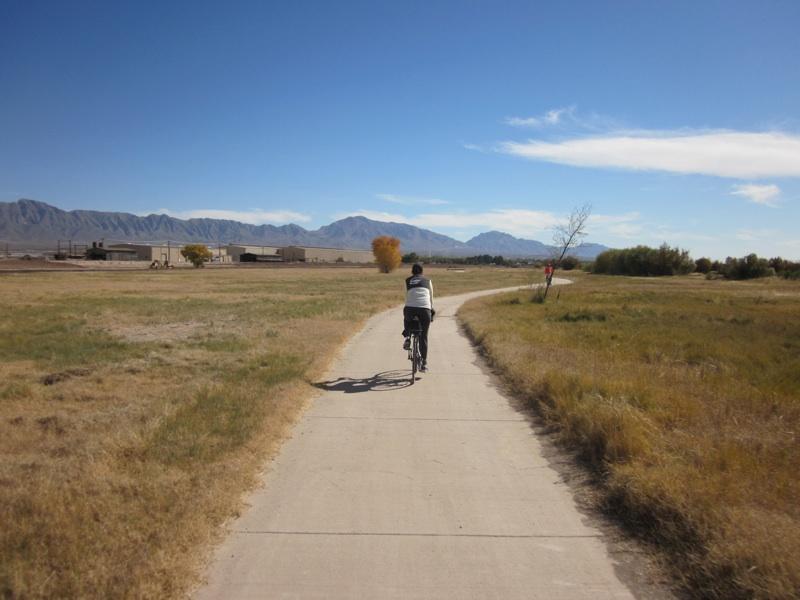
Trails like this one, along the Rio Grande, will connect the El Paso region, thanks to funding from the El Paso Metropolitan Planning Organization. Photo: El Paso Southwest
The El Paso Metropolitan Planning Organization wants to complete more trails like this one, along the Rio Grande, throughout the region. Photo: El Paso Southwest
Photo: El Paso Southwest

The organization passed a new rule that designates seven key corridors as the "active transportation system." Next, the MPO will identify gaps in the walking and biking network and issue calls for projects that complete the missing links.

The rule is part of the MPO's efforts to increase walking and bicycling rates and improve air quality. "We are now planning for people versus added capacity projects that just satisfy vehicles," said Alexandra Riccillo, a transportation analyst with El Paso MPO.

Cities that respond to the MPO's request will have to provide 20 percent of the project cost, with the remaining 80 percent coming from federal funds. "Now that we have in essence a specific [call for projects], the money’s already there," said Riccillo

The rule also requires Texas DOT to implement walking and biking upgrades whenever the agency conducts road work on the active transportation network.

That's what most excites Scott White, policy director at Velo Paso, the local bike advocacy organization.

"TxDOT is notorious for saying, 'We’ll make it bike and pedestrian friendly,' but if the budget gets stretched, what’s the first thing to go? All the bike and ped stuff," he said.

White thinks the influence of the new MPO rule will extend beyond the seven corridors in the active transportation network and affect intersecting streets as well.

"By creating these corridors, it’s almost like when you do a historical overlay on a district," he said. "There are certain rules that apply. You can’t simply say we need to have capacity and have capacity be for cars only. You have to look at active transportation."

Stay in touch

Sign up for our free newsletter

More from Streetsblog USA

Friday Video: The Secret History of Amtrak’s Mardi Gras Service

...and what it means for new passenger rail service across America.

December 19, 2025

Friday’s Headlines Walk the Line

If you're a capitalist, the market says there's a premium for living in a walkable neighborhood. So why not supply more to meet demand?

December 19, 2025

Talking Headways Podcast: Fighting to Win

Carter Lavin talks with Jeff Wood about the necessity of messy politics in obtaining street safety.

December 18, 2025

Streetsblog’s ‘Car-Free Carolers’ Bring the Joy, Mirth and Ho-Ho-Hope to this Holiday Season

Streetsblog's singers are back, belting out their parody classics to make a serious point: New York's roadways don't have to be dangerous places for kids and lungs, but can be joyous spaces for people to walk around, shop, eat or just ... hang out.

December 18, 2025

Study: More Protected Bike Lanes = More Micromobility Users

This ought to silence doubters who claim that no one's using that shiny new cycle track.

December 18, 2025

Thursday’s Headlines Are Hot-Blooded, Check It and See

Hopefully the Earth won't have a fever of 103 when judges get done with the Trump administration's proposal to dismantle greenhouse gas regulations.

December 18, 2025
See all posts