Yesterday, during the one-hour debate period over the House proposal to extend transportation funding through May 31, lawmaker after lawmaker stood up to condemn the bill. America needs a long-term transportation bill, they said. A short-term stopgap only creates more uncertainty.
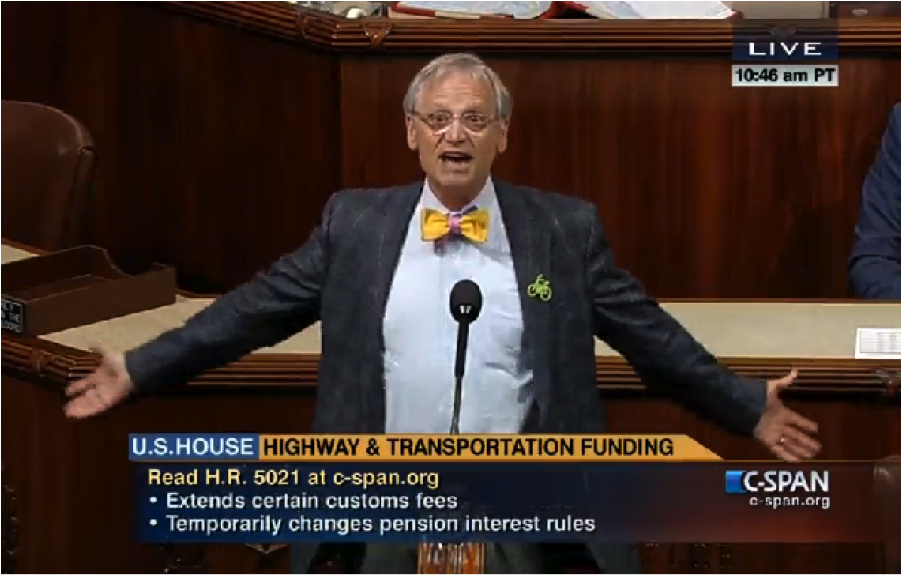
And then they voted for it.
More Democrats than Republicans voted for it, in fact, despite standing up and declaring that “a short term solution is not enough” or that it’s “just another kick-the-can-down-the-road approach” or that it’s just “a little shuffling around of money so we can pretend... we’re not creating more debt.” But in the end, the Highway and Transportation Funding Act passed easily, with only 10 Democrats and 45 Republicans voting against it.
Democrat Peter Welch of Vermont cast one of those "no" votes. During the floor debate, he called the bill an “abdication of our responsibility.”
“Some folks are saying we need time to put together a long-term bill,” he said. “We’ve had time. What we need is a decision.”
Rep. Earl Blumenauer is in favor of an extension, but only through the lame duck period after the election. He voted no as well, criticizing Republicans for failing to have a “deliberate, thoughtful process.”
“We have not had a single hearing on transportation finance in the Ways and Means Committee all year,” he said. “We didn’t have one the year before that. We haven’t had a hearing in the 43 months that the Republicans have been in charge.”
So here’s where things stand: The Senate Finance Committee has passed a largely similar extension bill, with the same amount of money coming out of slightly different funding sources.
Finance Committee Chair Ron Wyden also failed to include an expiration date in his bill. Sen. Barbara Boxer is expected to introduce an amendment putting a December 31 date on it -- so that she would still be chair of the EPW Committee when the real bill gets negotiated -- but the juggernaut is already in motion toward a longer extension until May. By putting enough money in the bill to get there, Wyden was tacitly acceding to that timeline without overtly ruffling Boxer’s feathers. Even President Obama has given the green light to the House bill, though he also insisted that “Congress shouldn’t pat itself on the back for averting disaster for a few months, kicking the can down the road for a few months, careening from crisis to crisis.”
Senate Majority Leader Harry Reid says he plans to schedule three floor votes before the August recess: the House bill, the Senate Finance Committee bill, and Boxer’s December 31 plan.
Boxer, of course, doesn’t refer to her own hold on the committee when lobbying for a shorter extension. She just says the longer one is “a really bad idea because the longer the patch, the longer the indecision, the more jobs lost, the more businesses go under.”
Besides, now that presidential election seasons last for two years (at least), punting until May could easily bleed into much longer delays. After all, if it’s too hard to pass a major spending bill in the run-up to a mid-term election, imagine the resistance to passing one during a presidential race.
But that's not the worst part.
Let’s be clear: If the Republicans really do take control of the Senate in January, that means that the bill sent to President Obama’s desk will be one crafted and approved by Republicans. The current House Transportation Committee chair, Bill Shuster, has a better track record of consulting with Democrats than his predecessor, John Mica, but with a Republican Senate, even Shuster might be less invested in bipartisanship. Control of the Environment and Public Works Committee would shift to Louisiana Republican David Vitter, who has a track record of rejecting any revenue increase, railing against merit-based transportation financing, and working to cut environmental reviews for road projects.
A Congress with both chambers controlled by Republicans could revive old, rejected ideas like devolving transportation funding to states, closing the Highway Trust Fund’s transit account, or eliminating federal support for bike and pedestrian projects. That is the scenario set up by yesterday’s extension vote with its May 31 sunset.
Oh, and if you’re impressed that Congress is addressing this issue well before the September 30 expiration of the current MAP-21 bill, don’t be. That bill’s funding fixes -- gimmicks in their own right -- didn’t manage to last all the way until its sunset, and the highway account of the Highway Trust Fund is expected to dip into insolvency by the end of next month. U.S. DOT was preparing to start cutting payments to states by 28 percent on August 1. And Congress has only 10 work days left on the legislative calendar before members retreat to their home districts for the month of August.